Africa can leapfrog legacy systems for cleaner, smarter power – manufacturer

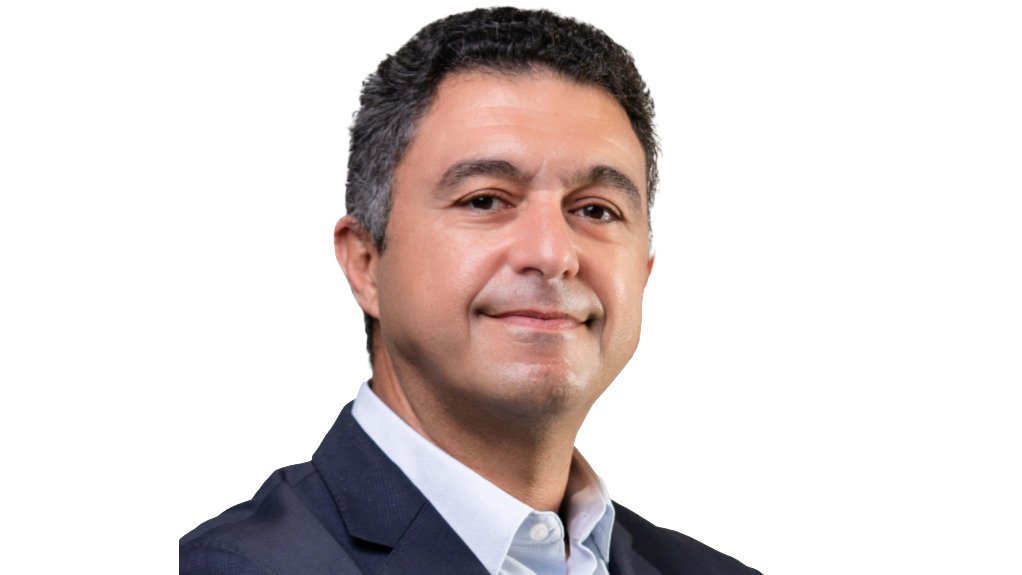
WALID SHETA Africa's electricity demand is high and international projections show that power consumption in developing economies is rising faster than GDP



Africa has the potential to bypass a century of centralised, carbon-heavy power systems and move straight to a digital, distributed and low-carbon grid, but only if project execution matches project ambition, says global energy technology company Schneider Electric Middle East and Africa Zone president Walid Sheta.
He argues that electrification, efficiency and smart grid management form the continent’s fastest route to economic growth and, in elaborating on Africa’s energy transition, says that demand fundamentals create “an historic opening”.
“Africa’s electricity demand is high and international projections show that power consumption in developing economies is rising faster than GDP.
“Electrification is not only a climate imperative but an economic accelerant, enabling data centres, water treatment plants and modern infrastructure that underpin industrialisation and urban growth,” states Sheta.
He adds that Africa’s relative lack of entrenched legacy systems is advantageous and insists that, instead of retrofitting ageing grids, African nations can deploy digital management systems, distributed renewable energy solutions and microgrids from the outset.
However, constraints remain, as about 680-million people in Africa still lack access to electricity, most of them in rural areas, while cities are expanding at a “blistering pace”.
Smart Grid Panorama
Sheta draws a clear distinction between rural and urban pathways: In remote regions, microgrids – often defined by hybrid systems combining solar PV, battery storage and backup generation – can electrify villages rapidly.
He also suggests that the technology and affordability of microgrids are largely proven, but concedes that bigger gaps lie in project development capacity and execution at scale.
In cities, meanwhile, the challenge shifts to managing density and reliability, rendering the digitalisation of distribution networks as compulsory rather than optional.
“The digitalisation of the control of the grid is not a ‘nice to have’, it’s really bringing results in efficiency and continuity of service to the utilities,” highlights Sheta.
He cites advanced distribution management deployments with utilities, such as Senegalese national electricity company Senelec, where an advanced distribution management system (ADMS) platform reduced power recovery times from more than three hours to under three minutes.
The economic implications of using smart grids are also immediate, with fewer production stoppages, reduced spoilage for retailers and greater resilience for small businesses.
Sheta adds that, in practice, large-scale dispatch control implementations, including projects in Cairo, in Egypt, demonstrate similar systemic gains, and by improving demand response and outage management, digital platforms could trim national consumption while enhancing reliability to effectively create virtual capacity without building new generation.
Renewables are already reshaping parts of Africa, he says, elaborating that for example, more than 90% of electricity supply in Kenya is derived from renewable-energy sources, including geothermal, wind and solar.
In addition, utility-scale solar farms of 100 MW and above remain attractive owing to bankability and economies of scale, highlights Sheta, adding that decentralised microgrids offer customised solutions for agriculture, water pumping and off-grid communities.
However, the optimal configuration depends on load profiles and storage requirements, he suggests.
Prioritise Efficiency
Sheta says the “most efficient energy one can use is the energy that one does not consume”, arguing that software-driven optimisation and modern hardware can reduce consumption in hospitals, hotels, government buildings and industry by up to 30%.
Such reductions, he contends, relieve pressure on overstretched grids, defer capital-intensive transmission upgrades and free up capacity to connect new consumers, all without adding generation assets.
In rapidly urbanising economies, Sheta says the combination of speed, cost-effectiveness and scalability is difficult to ignore.
The broader argument is that electrification, decarbonisation and digitalisation are not competing with economic development but rather enabling it, and that smart grids enhance reliability.
Moreover, renewables could reduce exposure to fuel price volatility, while efficiency could lower operating costs.
Together, they form what Sheta describes as “quick wins” that strengthen national economies and household budgets.
Africa’s leapfrogging potential, then, rests less on technological novelty than on coordinated deployment and building blocks – such as digital control systems, microgrids, utility-scale renewables and efficiency platforms – all of which are readily available, he points out.
“The decisive factor will be whether governments, utilities and private-sector partners can execute at the pace that demographic and economic trends demand,” concludes Sheta.
Article Enquiry
Email Article
Save Article
Feedback
To advertise email advertising@creamermedia.co.za or click here
Research Reports

Projects

Latest Multimedia

Latest News
Showroom

For over 15 years, Lilak Aluminium, a trusted leader in architectural extrusion supply, has delivered excellence to businesses like yours.
VISIT SHOWROOM
ISO-certified Condra manufactures overhead cranes, portal cranes, cantilever cranes and crane components: hoists, drives, end-carriages, brakes and...
VISIT SHOWROOM
Press Office
Announcements
What's On
Subscribe to improve your user experience...
Option 1 (equivalent of R125 a month):
Receive a weekly copy of Creamer Media's Engineering News & Mining Weekly magazine
(print copy for those in South Africa and e-magazine for those outside of South Africa)
Receive daily email newsletters
Access to full search results
Access archive of magazine back copies
Access to Projects in Progress
Access to ONE Research Report of your choice in PDF format
Option 2 (equivalent of R375 a month):
All benefits from Option 1
PLUS
Access to Creamer Media's Research Channel Africa for ALL Research Reports, in PDF format, on various industrial and mining sectors
including Electricity; Water; Energy Transition; Hydrogen; Roads, Rail and Ports; Coal; Gold; Platinum; Battery Metals; etc.
Already a subscriber?
Forgotten your password?
Receive weekly copy of Creamer Media's Engineering News & Mining Weekly magazine (print copy for those in South Africa and e-magazine for those outside of South Africa)
➕
Recieve daily email newsletters
➕
Access to full search results
➕
Access archive of magazine back copies
➕
Access to Projects in Progress
➕
Access to ONE Research Report of your choice in PDF format
RESEARCH CHANNEL AFRICA
R4500 (equivalent of R375 a month)
SUBSCRIBEAll benefits from Option 1
➕
Access to Creamer Media's Research Channel Africa for ALL Research Reports on various industrial and mining sectors, in PDF format, including on:
Electricity
➕
Water
➕
Energy Transition
➕
Hydrogen
➕
Roads, Rail and Ports
➕
Coal
➕
Gold
➕
Platinum
➕
Battery Metals
➕
etc.
Receive all benefits from Option 1 or Option 2 delivered to numerous people at your company
➕
Multiple User names and Passwords for simultaneous log-ins
➕
Intranet integration access to all in your organisation