Africa-based agricultural initiative creates global template

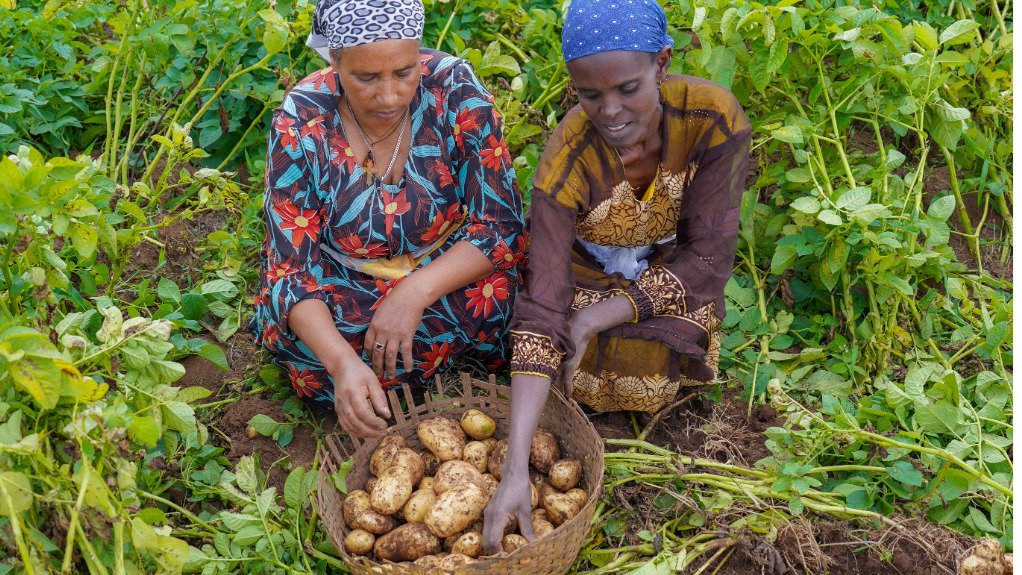
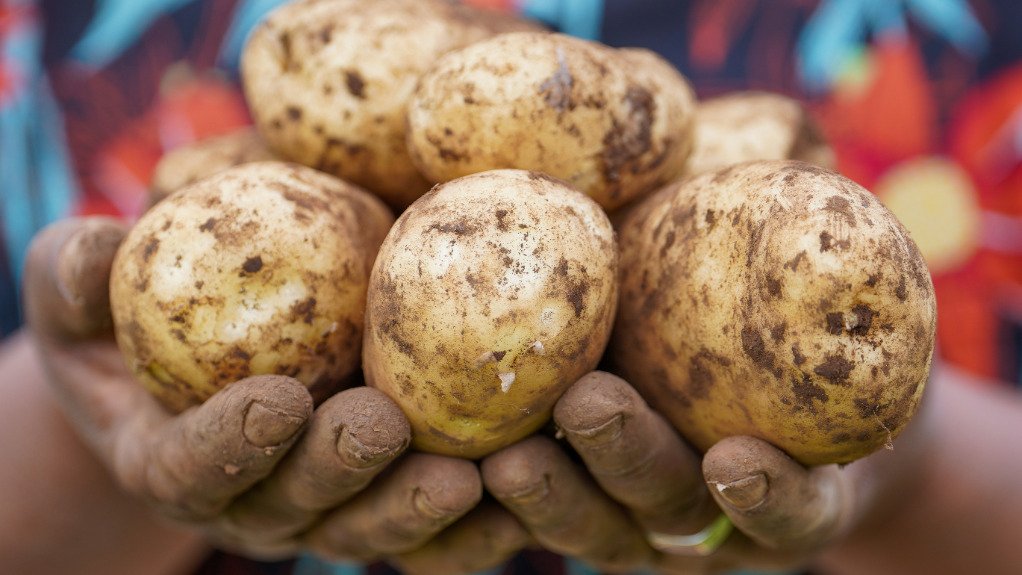
FARMING FOR THE FUTURE The Africa-based farm-to-supplier template developed by PepsiCo, has helped shift agricultural development from a production-first approach toward a commercially driven system
GOLDEN HARVEST PepsiCo currently has more than 2 800 farmers contracted to supply it with potatoes



The Strengthening Market Access through Rural Technologies for Potato Production (‘SMART Potato’) initiative has demonstrated a “market-led, commercially oriented model for agricultural value-chain development that can be adapted across African countries and commodities”, according to its primary commercial offtaker food and beverage giant PepsiCo Ethiopia.
Launched in 2024 by RTI International through the U.S. Government-funded Ethiopia Transforming Agriculture activity, the approach is implemented in partnership with the nonprofit European Cooperative for Rural Development.
It starts with “clearly identified” market demand and buyer requirements, and then aligns farmers, inputs, finance, production support, aggregation, quality assurance, logistics and market access to that demand.
This has helped shift agricultural development from a production-first approach toward a commercially driven system with clear incentives for farmers and private-sector actors, says PepsiCo.
“To date more than 2 800 contracted farmers are growing potatoes for PepsiCo through the initiative,” says PepsiCo Africa franchise and Ethiopia/Nigeria Foods corporate affairs director Meghna Laxman.
She adds that contract arrangements establish demand, quality requirements and pricing, while seed multiplication is helping to address one of the value chain’s most persistent bottlenecks.
PepsiCo’s potato sourcing in Ethiopia is now fully local, with 84% supplied through the initiative.
A second initiative, run by independent research institute RTI International, brings together PepsiCo and a network of cross-industry agricultural partners to develop a domestic sunflower value chain in Ethiopia.
By leveraging American technology, this commercial partnership aims to reach 72 000 farmers across 43 000 ha and generate $300-million in sunflower oil sales. The initiative also expands trade between the US and Ethiopia.
More than a Template
The SMART Potato model is highly replicable “because its core principles are not dependent on a specific crop or country”, explains RTI International Senior Agriculture Advisor Dr Tebeje Nigussie.
“Across Africa, the sequence can be adapted to local market opportunities and institutions: identify demand, organise and link farmers to buyers, facilitate access to inputs and finance, strengthen production and post-harvest systems, and establish reliable commercial offtake,” he adds.
Importantly, over time, buyers, cooperatives, financial institutions, input suppliers and service providers can assume these functions, thereby reducing dependence on donor facilitation and creating sustainable, commercially financed value chains that create “lasting opportunities for smallholder farmers and agribusinesses”.
The initiative is designed to raise average potato productivity from about 15-tonnes a hectare to 18.5-tonnes a hectare, representing an increase of about 23%. It also estimates that participating farmers could increase their income by about 35%.
Planting the Seed
The Ethiopia model already integrates government agricultural offices and extension staff alongside PepsiCo farmers, cooperatives, financial institutions and suppliers.
“Multistakeholder platforms provide a mechanism for joint problem solving and coordination.”
She notes that, when adopting similar programmes, governments do not necessarily need to become the buyer or manage commercial transactions; their strongest contribution is often to make it easier for farmers and businesses to establish transparent, competitive and sustainable commercial relationships.
Key risks to the success of such a programme include access to suitable land, climate and water constraints, weak seed and input supply, inadequate roads and aggregation infrastructure, limited finance, market-price and currency volatility, policy uncertainty, and security challenges.
“An important safeguard is a competitive and diversified market system that avoids dependence on a single buyer,” stresses Nigussie.
He suggests that transparent contracts can facilitate predictable demand, while alternative markets, stronger cooperatives, access to quality input and finance, climate-smart practices, appropriate varieties, crop rotation, better post-harvest management, and insurance or other cost and risk-sharing mechanisms can strengthen resilience.
“The real test of an agricultural partnership is not how many organisations sit around the table, but whether the farmer has a stronger business at the end of it,” says Laxman, stressing that, if farmers can produce more efficiently, earn more predictably and reach a dependable market, while building a more resilient local supply base for business partners, then the partnership is creating value on both sides.
“That is the kind of model that has a chance to scale,” she concludes.
Article Enquiry
Email Article
Save Article
Feedback
To advertise email advertising@creamermedia.co.za or click here
Research Reports


Projects


Latest Multimedia


Latest News


Showroom
Established in 1933, EKATO is the world leader in agitation technology, supplying agitators for processes and applications such as chemicals and...
VISIT SHOWROOM
We are responsible manufacturers of essential components. Manufacturing 80 million parts a week, we have over 1 billion parts in stock.
VISIT SHOWROOM



Press Office
Announcements
What's On
Subscribe to improve your user experience...
Option 1 (equivalent of R125 a month):
Receive a weekly copy of Creamer Media's Engineering News & Mining Weekly magazine
(print copy for those in South Africa and e-magazine for those outside of South Africa)
Receive daily email newsletters
Access to full search results
Access archive of magazine back copies
Access to Projects in Progress
Access to ONE Research Report of your choice in PDF format
Option 2 (equivalent of R375 a month):
All benefits from Option 1
PLUS
Access to Creamer Media's Research Channel Africa for ALL Research Reports, in PDF format, on various industrial and mining sectors
including Electricity; Water; Energy Transition; Hydrogen; Roads, Rail and Ports; Coal; Gold; Platinum; Battery Metals; etc.
Already a subscriber?
Forgotten your password?
Receive weekly copy of Creamer Media's Engineering News & Mining Weekly magazine (print copy for those in South Africa and e-magazine for those outside of South Africa)
➕
Recieve daily email newsletters
➕
Access to full search results
➕
Access archive of magazine back copies
➕
Access to Projects in Progress
➕
Access to ONE Research Report of your choice in PDF format
RESEARCH CHANNEL AFRICA
R4500 (equivalent of R375 a month)
SUBSCRIBEAll benefits from Option 1
➕
Access to Creamer Media's Research Channel Africa for ALL Research Reports on various industrial and mining sectors, in PDF format, including on:
Electricity
➕
Water
➕
Energy Transition
➕
Hydrogen
➕
Roads, Rail and Ports
➕
Coal
➕
Gold
➕
Platinum
➕
Battery Metals
➕
etc.
Receive all benefits from Option 1 or Option 2 delivered to numerous people at your company
➕
Multiple User names and Passwords for simultaneous log-ins
➕
Intranet integration access to all in your organisation