
AfCFTA’s promise will depend on execution, not ambition





For many South African corporates, the African growth story is visible in customer demand, supply chains, infrastructure plans, mining corridors, manufacturing expansion, and the steady movement of businesses into new regional markets.
The question is no longer whether Africa represents opportunity; rather, it is whether companies can operate across the continent with the financial, operational, and institutional support needed to turn opportunity into trade.
This is where the African Continental Free Trade Area (AfCFTA) is important because it creates a framework for a more integrated African economy. It provides the continent with a shared language to reduce barriers, deepen intra-African trade, and build more competitive regional value chains.
However, policy ambition does not move goods. It does not settle invoices, manage foreign exchange exposure, finance imports and exports, or help a corporate treasury team understand risk across several jurisdictions. Those are execution problems, and they are where the next phase of African trade will be decided.
From where I sit, this is becoming the central issue for corporates with growth ambitions in Africa. Many already understand the market opportunity. What they need is a clearer way to operate across fragmented environments.
A business expanding from South Africa into the rest of the continent may deal with different banking relationships, regulatory requirements, currency risk, fragmented payment systems, documentation processes, and counterparty risks in each market. The opportunity may be continental, but the day-to-day experience often remains deeply local and uneven.
Trade corridors are often spoken about as physical routes linking ports, roads, rail, warehouses, mines, farms and industrial zones. They are also financial systems. A corridor cannot function properly if capital, payments, guarantees, credit and market knowledge do not move with confidence.
South Africa remains a major base for companies looking to expand across the continent. Many local businesses have the products, expertise, financial capacity and operational maturity to compete regionally.
Yet expansion becomes harder when the financial architecture does not match the commercial ambition.
The role of a pan-African bank in this environment is not simply to provide products. It is to help clients connect markets. That requires local knowledge, balance sheet capacity, trade finance capabilities, foreign exchange support, payment infrastructure, risk mitigants, and relationship continuity across borders.
This thinking sits behind Access Bank’s OneBank approach. The value of a pan-African banking model is not that it removes all complexity. Africa is too diverse, and each market carries its own realities. The value lies in giving corporates a more coherent way to navigate that complexity.
For a company trading across several African markets, the value often sits in the practical details. The finance team needs to know where cash sits, how quickly payments can move, what currency exposure assists, and whether funding matches the trade cycle. A more connected banking relationship helps bring those moving parts into clearer view, while supporting the working capital, import, export and sector-specific requirements that shape real transactions.
Access Africa adds another important layer because payments are not a secondary issue in African trade. As Access Bank’s cross-border payments platform, Access Africa is designed to support the movement of funds across markets and help businesses manage one of the most practical points of friction in regional trade. If businesses cannot move funds efficiently, securely, and with sufficient transparency, trade slows down before it has a chance to scale.
The next stage of continental integration cannot be confined to boardroom conversations or policy documents. It has to be felt in how companies pay suppliers, receive funds, manage liquidity, support distributors, and build confidence across markets.
AfCFTA provides the policy direction, and trade corridors provide the commercial routes. Financial institutions must help build the execution layer between them.
This is especially important now. Global supply chains are shifting, and African businesses have an opportunity to capture more value in agriculture, mining, manufacturing, logistics, energy and services. The continent does not only need more trade, it also needs better-structured trade that allows value to move across borders with less friction and greater resilience.
That will require collaboration between policymakers, regulators, logistics providers, financiers, and businesses. No single institution can solve the constraints on its own. But banks with a meaningful African footprint have a particular responsibility because they sit close to the real movement of capital and commerce.
For South African corporates, African expansion cannot be treated as a series of separate market entries. It needs to be approached as corridor participation, with a clear view of where goods move, where capital is needed, where payments slow down, and where currency risk exists.
The companies that succeed will be those that prepare for the operating reality, not only the growth narrative. They will need banking structures that can support them across markets, while still respecting the local conditions that shape each transaction.
This is where the promise of AfCFTA becomes practical. Its success will not be measured only by agreements signed or speeches delivered; it will be measured by whether African businesses can trade more easily, finance that trade more efficiently, and build value chains strong enough to compete beyond the continent.
Africa has no shortage of ambition. The real work now is execution.
By Access Bank South Africa Lloyd Caughey, Head: Trade Finance
Article Enquiry
Email Article
Save Article
Feedback
To advertise email advertising@creamermedia.co.za or click here
Research Reports


Projects


Latest Multimedia


Latest News


Showroom

The Steel Tube Export Association of South Africa was established to develop sustainable, internationally competitive carbon steel tube and pipe...
VISIT SHOWROOM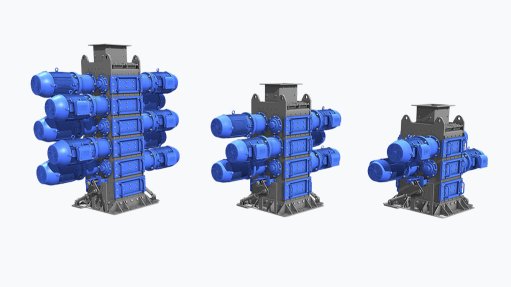
Energy and Densification Systems (EDS) has developed equipment for crushing, milling, blending and densifying products. Based on its globally...
VISIT SHOWROOM



Press Office
Announcements
What's On
Subscribe to improve your user experience...
Option 1 (equivalent of R125 a month):
Receive a weekly copy of Creamer Media's Engineering News & Mining Weekly magazine
(print copy for those in South Africa and e-magazine for those outside of South Africa)
Receive daily email newsletters
Access to full search results
Access archive of magazine back copies
Access to Projects in Progress
Access to ONE Research Report of your choice in PDF format
Option 2 (equivalent of R375 a month):
All benefits from Option 1
PLUS
Access to Creamer Media's Research Channel Africa for ALL Research Reports, in PDF format, on various industrial and mining sectors
including Electricity; Water; Energy Transition; Hydrogen; Roads, Rail and Ports; Coal; Gold; Platinum; Battery Metals; etc.
Already a subscriber?
Forgotten your password?
Receive weekly copy of Creamer Media's Engineering News & Mining Weekly magazine (print copy for those in South Africa and e-magazine for those outside of South Africa)
➕
Recieve daily email newsletters
➕
Access to full search results
➕
Access archive of magazine back copies
➕
Access to Projects in Progress
➕
Access to ONE Research Report of your choice in PDF format
RESEARCH CHANNEL AFRICA
R4500 (equivalent of R375 a month)
SUBSCRIBEAll benefits from Option 1
➕
Access to Creamer Media's Research Channel Africa for ALL Research Reports on various industrial and mining sectors, in PDF format, including on:
Electricity
➕
Water
➕
Energy Transition
➕
Hydrogen
➕
Roads, Rail and Ports
➕
Coal
➕
Gold
➕
Platinum
➕
Battery Metals
➕
etc.
Receive all benefits from Option 1 or Option 2 delivered to numerous people at your company
➕
Multiple User names and Passwords for simultaneous log-ins
➕
Intranet integration access to all in your organisation