Why Nigeria must accelerate the shift to SF6-free switchgear

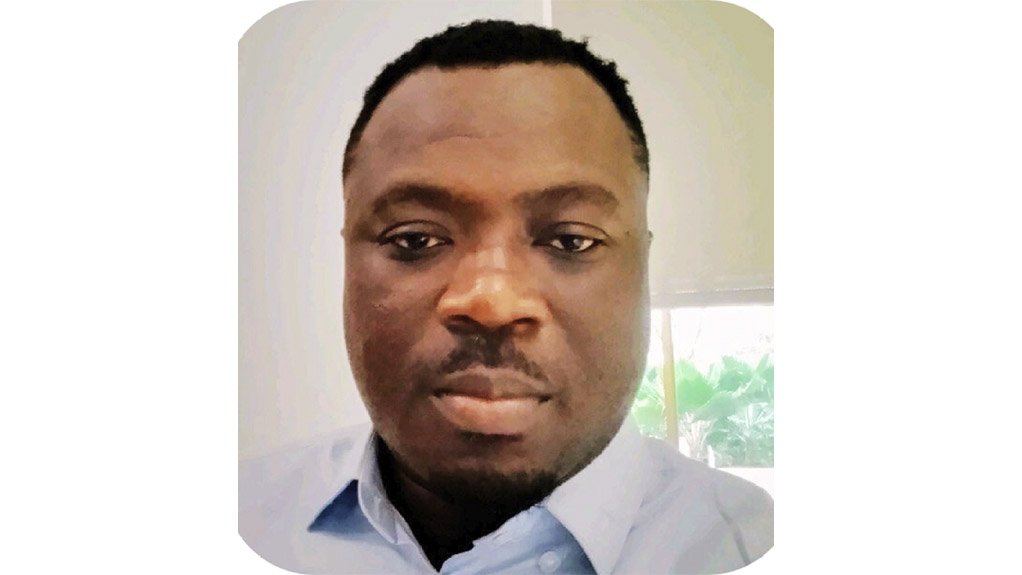



This article has been supplied.
By: Adesina Gbadebo - Power & Grid Segment, Schneider Electric West Africa
Nigeria is the land of abundance, richly endowed with natural resources, cultural diversity, and human capital. However, it is also this abundance that is putting the country’s grid under tremendous pressure; it faces an urgent need modernise its infrastructure to keep pace with its growing industries, and importantly, population.
Today, Nigerian must not only generate more power, it must also ensure that the systems responsible for distributing electricity are reliable, resilient and future ready.
Across Nigeria, aging infrastructure and persistent grid reliability issues continue to put strain on the country’s ability to deliver consistent power. Currently. Nigeria’s installed generation capacity is around 13,000 MW, but only about 7,000 MW is available for transmission, and actual delivered power is often closer to 4,000–5,000 MW due to technical and operational constraints.
Furthermore, access remains uneven, with approximately 60% of the population connected to the grid, and even those connected face frequent outages.
Overcoming infrastructure challenges with MV switchgear
The above highlights a significant infrastructure challenge, particularly within substations and distribution networks that move power from generation sources to homes, businesses and industries.
One often overlooked element of this infrastructure is medium voltage (MV) switchgear, the critical equipment responsible for safely controlling and distributing electricity throughout the grid.
Taking it one step further, a lot of the MV switchgear currently in operation relies on sulphur hexafluoride (SF6) as an insulating gas. While SF6 has long been used because of its strong electrical insulation properties, it is also one of the most potent greenhouse gases (GHG) known, with a global warming potential thousands of times greater than carbon dioxide.
Nigeria therefore now faces an important decision: whether to continue expanding the grid with legacy technologies which are environmentally unsafe or leapfrog directly to more sustainable alternatives.
The reliability of SF6-free technologies
The good news is recent innovations in switchgear design have introduced solutions that use pure air insulation and vacuum interruption, eliminating the need for SF6 entirely.
Importantly, these modern switchgear offerings also provide considerable operational advantages. For example, digital monitoring capabilities allow operators to track equipment performance in real time, improving asset management, predictive maintenance and overall grid reliability.
Schneider Electric’s SF6-free AirSeT switchgear range, built on proven MV design, replaces SF₆ with pure air insulation and vacuum interrupters, ensuring consistent performance without environmental compromise.
However, what sets it apart is its digital edge: IoT‑enabled monitoring and predictive maintenance tools give operators real‑time visibility, reducing downtime and extending asset life.
And for a country like Nigeria, where infrastructure resilience is essential to support economic growth, these capabilities represent a significant opportunity.
Speeding adoption
However, whilst the advantages of SF6-free technologies are clear, adoption in Nigeria has been slower than the market’s long-term potential might suggest. The most immediate barrier is cost.
The upfront investment for advanced switchgear can be higher than conventional alternatives. In a market where electricity tariffs remain relatively low, infrastructure investments often face tight financial constraints.
Contractors and project developers frequently prioritise solutions with the lowest initial cost, even if more advanced technologies deliver better performance and lower lifecycle costs over time. Not every customer is ready to adopt the newest technologies immediately.
For this reason, the early adoption of SF6-free switchgear in Nigeria is often driven by organisations whose operational priorities already align with sustainability and digital transformation.
Projects funded by international development institutions, climate funds or foreign financial organisations, for example, often require environmentally responsible technologies as part of their funding conditions. In these cases, SF6-free switchgear becomes the preferred choice.
Similarly, large industrial operators - particularly those exploring energy diversification strategies - are increasingly looking for infrastructure solutions that support both operational efficiency and environmental responsibility.
Another important driver is Nigeria’s growing renewable energy sector. Renewable projects such as solar farms can be deployed far faster than conventional power plants, but technology alone won’t dictate the pace of change. Policy enforcement and accountability are critical to ensuring sustainability standards aren’t watered down in the rush to cut costs.
Internationally funded schemes show that when strict environmental criteria are applied, developers deliver on their commitments. Nigeria has the chance to follow suit.
Next‑generation solutions such as SF6‑free switchgear prove that innovation can deliver reliability without sacrificing environmental responsibility. For Nigeria, embracing these technologies will be key to securing energy access and economic growth on a sustainable footing.
Article Enquiry
Email Article
Save Article
Feedback
To advertise email advertising@creamermedia.co.za or click here
Research Reports

Projects
Latest Multimedia
Latest News
Showroom
Columbus Stainless, based in Middelburg, Mpumalanga, is Africa’s only producer of stainless steel flat products. In addition, Columbus is the only...
VISIT SHOWROOM
The SAIMM started as a learned society in 1894 after the invention of the cyanide process that saved the South African gold mining industry of the...
VISIT SHOWROOM
Press Office
Announcements
What's On
Subscribe to improve your user experience...
Option 1 (equivalent of R125 a month):
Receive a weekly copy of Creamer Media's Engineering News & Mining Weekly magazine
(print copy for those in South Africa and e-magazine for those outside of South Africa)
Receive daily email newsletters
Access to full search results
Access archive of magazine back copies
Access to Projects in Progress
Access to ONE Research Report of your choice in PDF format
Option 2 (equivalent of R375 a month):
All benefits from Option 1
PLUS
Access to Creamer Media's Research Channel Africa for ALL Research Reports, in PDF format, on various industrial and mining sectors
including Electricity; Water; Energy Transition; Hydrogen; Roads, Rail and Ports; Coal; Gold; Platinum; Battery Metals; etc.
Already a subscriber?
Forgotten your password?
Receive weekly copy of Creamer Media's Engineering News & Mining Weekly magazine (print copy for those in South Africa and e-magazine for those outside of South Africa)
➕
Recieve daily email newsletters
➕
Access to full search results
➕
Access archive of magazine back copies
➕
Access to Projects in Progress
➕
Access to ONE Research Report of your choice in PDF format
RESEARCH CHANNEL AFRICA
R4500 (equivalent of R375 a month)
SUBSCRIBEAll benefits from Option 1
➕
Access to Creamer Media's Research Channel Africa for ALL Research Reports on various industrial and mining sectors, in PDF format, including on:
Electricity
➕
Water
➕
Energy Transition
➕
Hydrogen
➕
Roads, Rail and Ports
➕
Coal
➕
Gold
➕
Platinum
➕
Battery Metals
➕
etc.
Receive all benefits from Option 1 or Option 2 delivered to numerous people at your company
➕
Multiple User names and Passwords for simultaneous log-ins
➕
Intranet integration access to all in your organisation