Why logistics bottlenecks disrupt mining operations



Mining operations are built on precision, timing and coordination. Equipment must arrive when scheduled, materials need to move without delay, and every stage—from extraction to export—depends on a tightly managed chain of activity. When that chain breaks down, even briefly, the consequences ripple across the entire operation.
Logistics bottlenecks are one of the most common and underestimated causes of disruption in mining. While production issues often get the spotlight, delays in transport, supply, or site access can quietly erode efficiency, inflate costs, and stall progress at scale.
Understanding where these bottlenecks occur, and why they matter, is key to running a smoother, more resilient operation.
The Critical Role of Logistics in Mining
Mining is not just about extraction. It is an interconnected system involving equipment mobilisation, workforce coordination, materials handling, and outbound transport. Every component relies on logistics working seamlessly in the background.
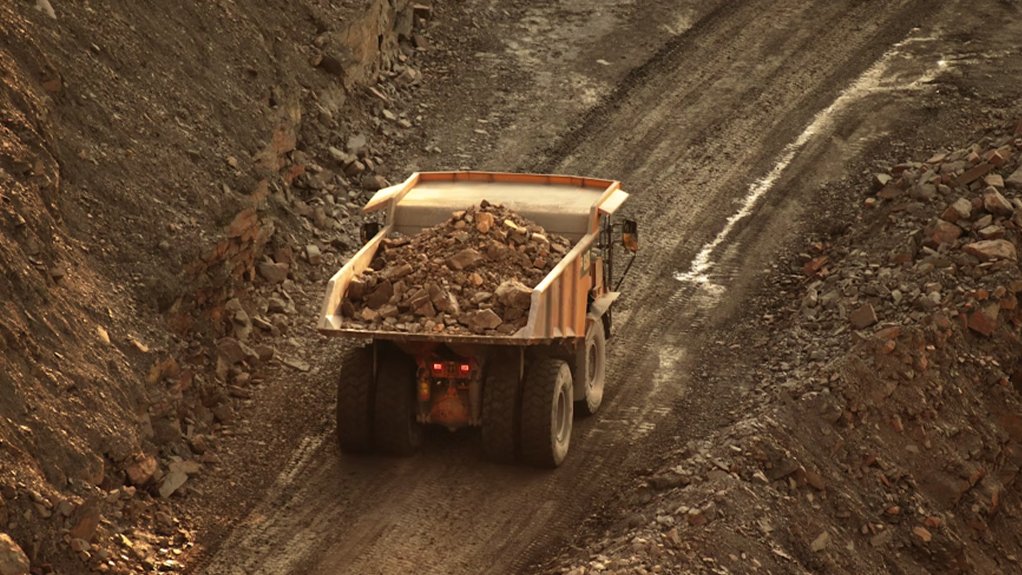
Heavy machinery, consumables and site infrastructure such as modular buildings for mining operations must be transported to site, often across long distances and difficult terrain. Consumables like fuel, parts, and safety equipment need to be delivered consistently. Once materials are extracted, they must be moved efficiently to processing facilities, rail lines, or ports.
When logistics flows properly, it is almost invisible. When it doesn’t, everything slows down.
Logistics disruptions in mining rarely come from a single point of failure. They tend to emerge at pressure points where demand, timing, and infrastructure do not align.
1. Transport Delays
Moving oversized or heavy equipment is rarely straightforward. Road restrictions, permitting requirements, and limited transport availability can all create delays before machinery even reaches site.
Once operations are underway, delays in haulage—whether by road, rail, or shipping—can quickly create backlogs. If extracted material cannot be moved out, production often needs to slow or stop.
2. Site Accessibility Challenges
Many mining operations are in remote or hard-to-reach areas. Seasonal weather conditions, poor road infrastructure, or limited access routes can restrict the movement of goods and personnel.
A single blocked access road or damaged transport route can disrupt supply deliveries, delay maintenance crews, and reduce operational flexibility.
3. Supply Chain Disruptions
Mining operations rely on a steady flow of parts and consumables. Delays in sourcing critical components—whether owing to global supply issues, supplier constraints, or shipping delays—can bring operations to a halt.
Even relatively small items can create major disruptions if they are essential to equipment performance or safety compliance.
4. Port and Export Constraints
For many operations, the final stage—export—is where bottlenecks become most visible. Congested ports, limited shipping slots, and regulatory delays can prevent materials from leaving on time.
When stockpiles build up faster than they can be cleared, storage capacity becomes strained, forcing production slowdowns.
5. Poor Coordination Between Stakeholders
Mining logistics involves multiple parties: contractors, transport providers, suppliers, and site managers. When communication breaks down or planning is misaligned, delays are almost inevitable.
A missed delivery window or scheduling mismatch can cascade into lost productivity across several teams.
The Real Impact of Bottlenecks
It is easy to think of logistics delays as minor setbacks. In reality, their impact is often far more significant.
When materials or equipment are not where they need to be, crews are left waiting, leading to lost productivity. Idle time on a mine site is expensive, particularly when large teams and high-value equipment are involved.
Delays often lead to additional costs—expedited shipping, equipment hire extensions, overtime labour, or penalty fees. Over time, these increased operation costs and expenses can significantly affect project profitability.
If spare parts or maintenance crews are delayed, critical equipment may remain offline longer than planned. This equipment downtime can create bottlenecks within the production process itself.
Mining operations rely heavily on forward planning. Logistics disruptions force constant adjustments, making it harder to maintain consistency and predictability and strain planning and scheduling.
Why Bottlenecks Are Becoming More Common
Several trends are making logistics challenges more pronounced across the mining sector.
Global supply chains have become more complex, with increased reliance on international sourcing. At the same time, infrastructure in some regions has struggled to keep pace with growing demand.
There is also greater regulatory oversight, particularly around transport, environmental impact, and safety. While necessary, these requirements can add layers of complexity to logistics planning.
On top of this, many operations are expanding into more remote locations, where access and infrastructure limitations are harder to overcome.
Reducing the Risk of Disruption
While logistics bottlenecks cannot always be eliminated, they can be managed more effectively with the right approach.
Strong logistics planning starts well before operations begin. Proactive planning through mapping transport routes, securing permits early, and building realistic timelines can reduce the risk of delays.
Relying on a single supplier or transport route increases vulnerability. Diversifying supply options and maintaining contingency plans can help operations stay flexible.
Clear coordination and improved communication between all stakeholders—suppliers, transport providers, and site teams—is essential. Real-time updates and shared scheduling systems can prevent misalignment.
Ensuring that sites are ready and prepared to receive equipment and materials when they arrive is just as important as the transport itself. Delays at the point of delivery can undo otherwise smooth logistics planning.
Leveraging technologies such as digital tracking, predictive analytics, and logistics management platforms are increasingly being used to monitor supply chains and anticipate disruptions before they escalate.
Mining operations are often judged by their output, but output is only possible when the entire system behind it is functioning properly. Logistics may sit behind the scenes, but its influence is constant and far-reaching.
Bottlenecks do not just slow things down—they create compounding issues that affect productivity, cost, and operational stability. Addressing them requires a broader view of mining operations, one that recognises logistics as a core driver of performance rather than a supporting function.
For operators looking to improve efficiency and reduce risk, refining logistics is not optional. It is one of the most practical ways to keep projects moving, even in challenging environments.
Article Enquiry
Email Article
Save Article
Feedback
To advertise email advertising@creamermedia.co.za or click here

Projects
Latest Multimedia


Latest News
Showroom
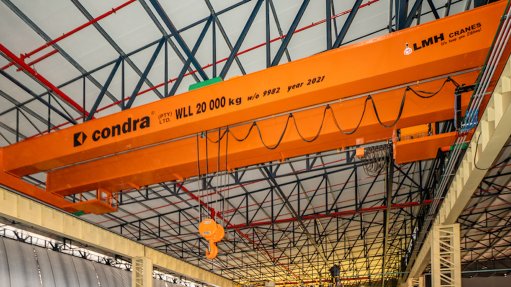
ISO-certified Condra manufactures overhead cranes, portal cranes, cantilever cranes and crane components: hoists, drives, end-carriages, brakes and...
VISIT SHOWROOM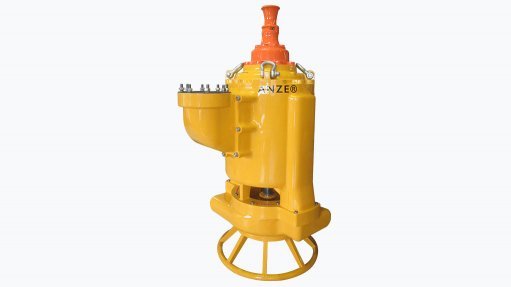
Goodwin Submersible Pumps Africa is sole distributors for Goodwin electrically driven, submersible, abrasion resistance slurry pumps.
VISIT SHOWROOM



Announcements
What's On
Subscribe to improve your user experience...
Option 1 (equivalent of R125 a month):
Receive a weekly copy of Creamer Media's Engineering News & Mining Weekly magazine
(print copy for those in South Africa and e-magazine for those outside of South Africa)
Receive daily email newsletters
Access to full search results
Access archive of magazine back copies
Access to Projects in Progress
Access to ONE Research Report of your choice in PDF format
Option 2 (equivalent of R375 a month):
All benefits from Option 1
PLUS
Access to Creamer Media's Research Channel Africa for ALL Research Reports, in PDF format, on various industrial and mining sectors
including Electricity; Water; Energy Transition; Hydrogen; Roads, Rail and Ports; Coal; Gold; Platinum; Battery Metals; etc.
Already a subscriber?
Forgotten your password?
Receive weekly copy of Creamer Media's Engineering News & Mining Weekly magazine (print copy for those in South Africa and e-magazine for those outside of South Africa)
➕
Recieve daily email newsletters
➕
Access to full search results
➕
Access archive of magazine back copies
➕
Access to Projects in Progress
➕
Access to ONE Research Report of your choice in PDF format
RESEARCH CHANNEL AFRICA
R4500 (equivalent of R375 a month)
SUBSCRIBEAll benefits from Option 1
➕
Access to Creamer Media's Research Channel Africa for ALL Research Reports on various industrial and mining sectors, in PDF format, including on:
Electricity
➕
Water
➕
Energy Transition
➕
Hydrogen
➕
Roads, Rail and Ports
➕
Coal
➕
Gold
➕
Platinum
➕
Battery Metals
➕
etc.
Receive all benefits from Option 1 or Option 2 delivered to numerous people at your company
➕
Multiple User names and Passwords for simultaneous log-ins
➕
Intranet integration access to all in your organisation