



+27 (0)11 0461900
Private Bag X139 Halfway House 1685

Why digital LV switchboards matter




By: Phumudzo Motalane - Offer Manager: Power Products - LV Systems at Schneider Electric
Today, buildings account for up to 40% of global energy consumption and CO2 emissions, a well-known statistic. But buildings also face a conundrum of sort as these structures are also expected to deliver higher availability, stronger safety performance whilst also being sustainable.
Granted, there is an increased awareness and subsequent movement toward greener buildings, however, there are still some pieces on the chest board that are being overlooked. It is also these pieces that can make such a difference in the way buildings are developed, upgraded and managed.
A perfect example is the electrical room. For decades low-voltage (LV) switchboards have been treated as static infrastructure, designed to distribute power safely, but largely invisible, one would expect, once commissioned.
But herein lies is a fantastic opportunity, particularly in today’s digitised and electrical world. For one, electrical faults remain one of the leading causes of fires and unplanned downtime in buildings, while reactive maintenance approaches expose organisations to avoidable risk, cost, and disruption.
And this where the digital switchboard steps into the fore. Today, a digital switchboard represents an important shift in the way in electrical distribution is designed, operated, and maintained.
No longer a passive endpoint, it a connected, data-driven asset, capable of delivering real-time visibility, predictive insights, and measurable performance improvements.
Digitally connected LV switchboards are relevant across a myriad of structures, from commercial buildings, schools and campuses to light industrial sites which all share common challenges like mitigating downtime, improving maintenance and reducing energy.
Indeed, by embedding intelligence directly into the switchboard, facility and energy managers gain true insight into their electrical infrastructure in ways that were previously impossible, without disrupting IT systems or adding unnecessary complexity.
Safety first
Safety remains paramount in any buildings. However, according to EMF(SA), fault faulty electrical installations and overloaded circuits remain one of the leading causes of building fires in South Africa, posing serious risks to both property and life.
EMPSA highlights that inadequate maintenance of electrical equipment is a critical fire hazard, with many incidents traced back to wiring faults and non-compliance with safety standard.
Considering above, building stakeholders require demand systems that are safe by design, available by default, and compliant by construction. It here were digital switchboards offer valuable support with enhanced protection and monitoring capabilities that include:
- Arc-flash risk mitigation.
- Early detection of thermal anomalies.
- Continuous monitoring of switchboard and device health.
Availability is equally important which is why enhanced discrimination, draw-out breaker designs, and predictive maintenance capabilities allow faster fault resolution and more controlled maintenance interventions — reducing unplanned outages and extending asset life.
Furthermore, alignment with standards such as IEC 61439 and TR 61641, as well as power quality and seismic requirements, must be supported by ongoing visibility and documentation.
Efficiency and sustainability
As mentioned, energy efficiency and decarbonisation targets are now operational realities, and electrical distribution plays an important role in achieving both.
Digital switchboards enable detailed energy monitoring, benchmarking, and power quality analysis at the point of distribution.
In turn, this allows building owners to identify inefficiencies, detect anomalies, and optimise consumption profiles in line with operational needs.
Also, when integrated with energy management platforms, this data supports site-level carbon reporting, sustainability certifications, and informed decision-making around energy investments.
Simplifying complexity through native digital design
One of the barriers to digital adoption in electrical rooms has historically been fragmented architectures, multiple gateways, long commissioning times, and heightened cybersecurity concerns.
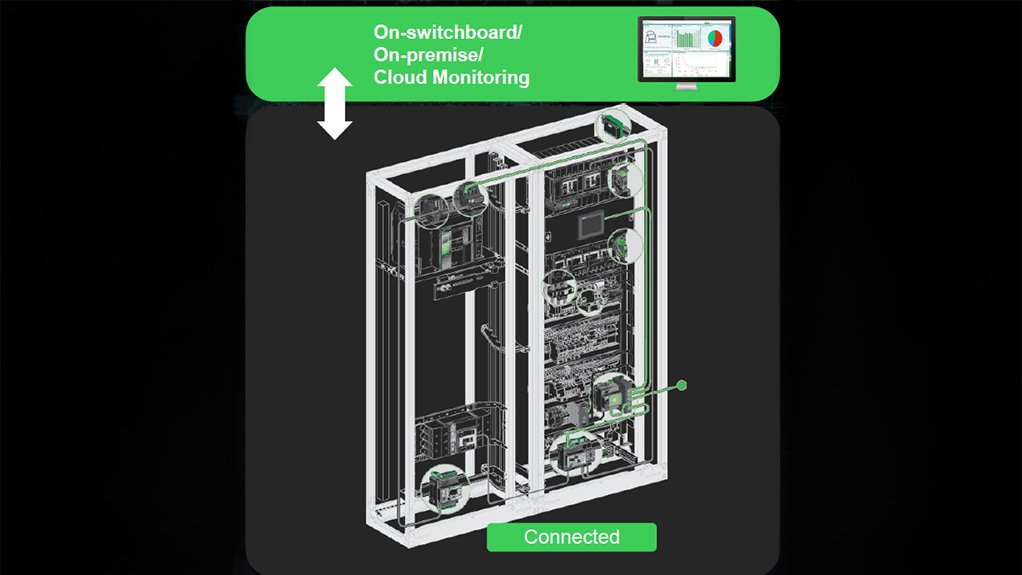
Here, modern digital switchboards address features modular architectures that simplify connectivity by reducing the number of digital components, enabling plug-and-play integration through standardised communication protocols, and minimising commissioning risk.
This approach accelerates deployment while ensuring scalability, therefore, allowing systems to evolve as building requirements change.
Native digital connectivity also enables seamless integration with monitoring and analytics platforms, providing a single source of truth for electrical performance, alarms, and maintenance insights across on-premise or cloud environments.
In an era where buildings are expected to be smarter, greener, and more resilient, the electrical room can no longer remain analogue. The digital switchboard is not a future concept, it already available and the logical next step in the evolution of power distribution.