




US grant boosts rare earths prefeasibility at Monte Muambe

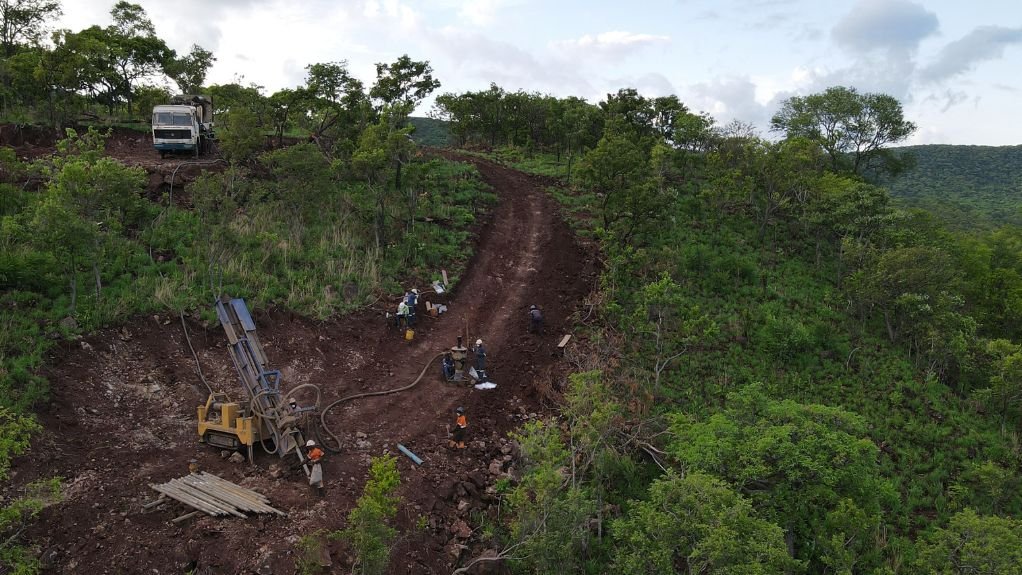
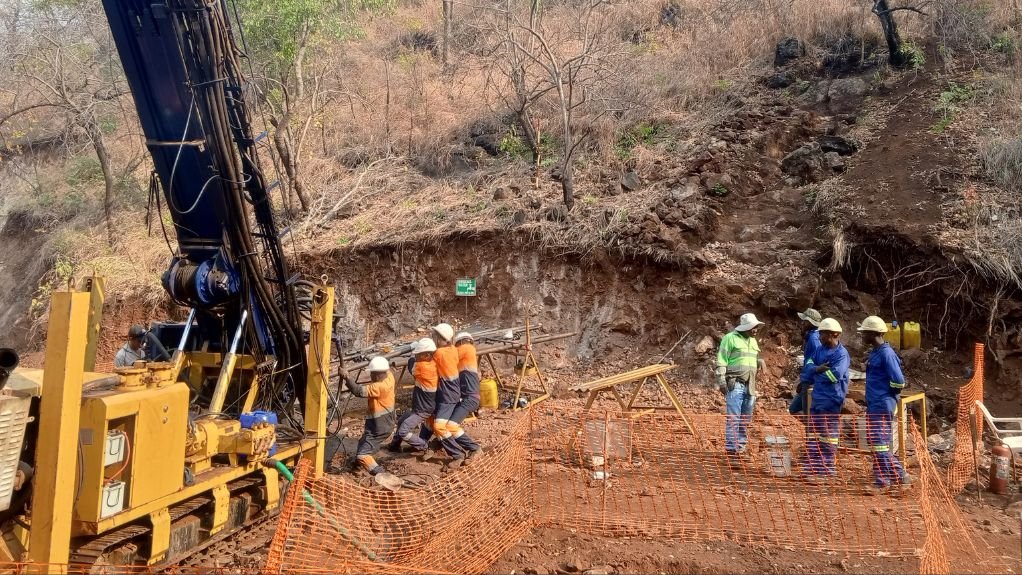
TECHNICAL WORK The US support aligns with Altona Rare Earth’s near-term programme by funding technical work on the Monte Muambe rare earths project
MINERALISATION EXTENSION Exploration work completed on Monte Muambe’s fluorspar and gallium zones in 2025 saw the extension of mineralisation beyond a historical fluorspar resource


A $1.87-million grant agreement signed with the US Trade and Development Agency for the prefeasibility stage of exploration and development company Altona Rare Earth’s Monte Muambe project, based in Mozambique, marks a key development milestone for the project, says company CEO Cedric Simonet.
The expression of support was announced during a US critical minerals pre-event, hosted in affiliation with the Investing in African Mining Indaba, held in Cape Town, and formalised in a signing ceremony at the US Embassy in Maputo two weeks later.
Simonet confirms that the grant will be used to fund the metallurgy and process engineering components of the rare earths prefeasibility, including a short drilling campaign to obtain fresh samples, and to update the financial model and valuation.
The US support aligns with Altona Rare Earths’ near-term development programme on the Monte Muambe rare earths project.
“This will allow us to focus our resources on the rapid development of the fluorspar project towards construction in 2027,” he says.
Simonet also presented updates on the Monte Muambe rare earths project, which forms part of the group’s large-scale, long-term development focus, as well as on the smaller, higher-grade fluorspar project and associated gallium potential, which are positioned as nearer-term production opportunities within the same mining licence.
Addressing the sequencing of the projects within the same mining licence, Simonet explains that Monte Muambe’s carbonatite deposit hosts multiple mineral commodities, with rare earths, fluorspar and gallium proving to be of specific interest.
He notes that the rare earths mineralisation at Monte Muambe is enriched in the central portion of the 2.5-km-diameter carbonatite intrusion, while high-grade fluorspar, with associated gallium mineralisation, occurs along the edges of the deposit.
“The rare earths project has progressed to prefeasibility stage and involves capital expenditure of more than $200-million and a development timeline of about five years.
“By contrast, the fluorspar project – at scoping study stage and, owing to its smaller scale, higher grade and capital requirement of less than $20-million – is expected to advance more rapidly towards production,” explains Simonet.
Because of differences in mineralisation, project dynamics and spatial distribution, the two projects are being advanced at the same time but as separate project streams.
On the rare earths prefeasibility work, Simonet says the immediate focus is on further derisking metallurgy and process engineering.
“Due to the number of minerals and chemical elements involved, metallurgy is always the most challenging aspect of any rare earths project,” he explains, adding that ongoing work is expected to unlock cost reductions. The hydrometallurgy component currently represents 50% of operating expenditure and can be reduced through optimisation of the beneficiation component.
Fluorspar, Gallium Interests
Exploration work completed on Monte Muambe’s fluorspar and gallium zones in 2025 saw the extension of mineralisation beyond a historical fluorspar resource that covered only a limited portion of the deposit.
“Drilling included both infill holes in previously drilled areas and new holes on fresh targets, with the aim of delivering an updated mineral resource estimate [MRE],” says Simonet.
The 2025 exploration work resulted in the discovery of gallium occurrences closely associated with fluorspar mineralisation.
The forthcoming MRE will therefore cover both fluorspar and gallium, while metallurgical options to extract gallium as a potential by-product remain under review.
In terms of minerals beneficiation, Simonet says Altona Rare Earths plans to produce 50 000 t/y of acid-grade fluorspar.
“Depending on the outcome of the MRE and further drilling planned later this year on undrilled targets, production capacity could increase to closer to 100 000 t/y.”
Historical metallurgical work indicates recoveries of about 65% at standard acid-grade fluorspar specifications, while representative ore samples are currently undergoing advanced metallurgical testing in South Africa to confirm the final flow sheet, process parameters and product specifications.