Tailings retreatment, land restoration intertwined

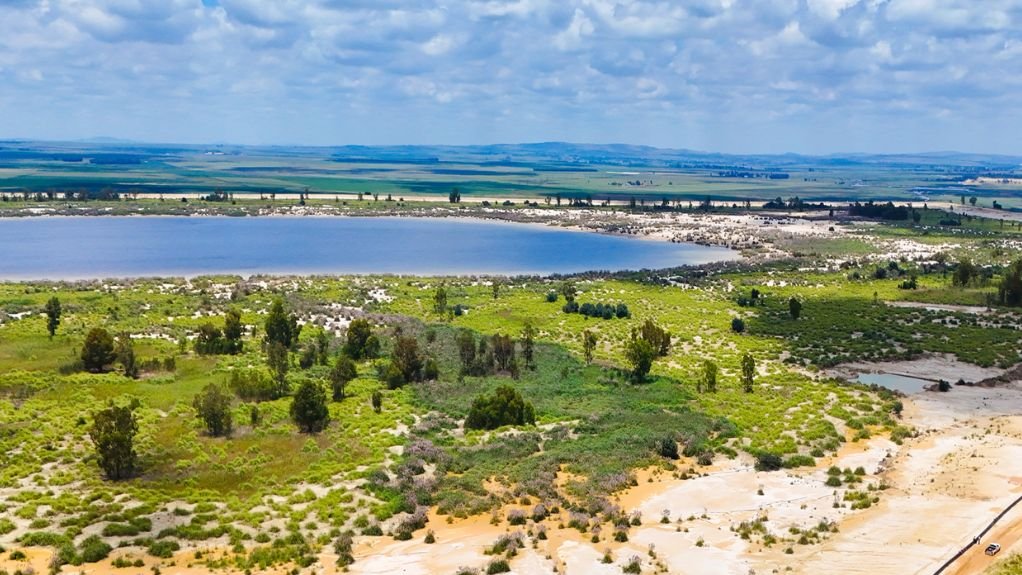
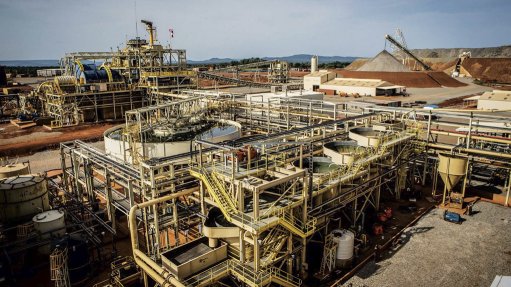
RETREATMENT OPERATIONS DRDGOLD’s Ergo Mining operations facility is one of the largest surface gold tailings retreatment operations, globally


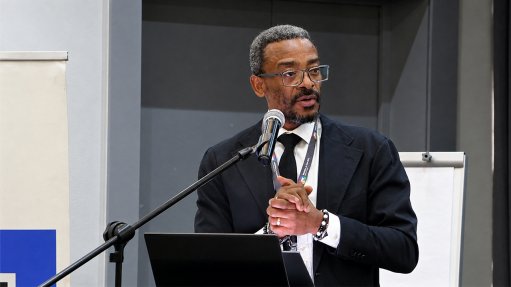
Recovering gold from legacy tailings storage facilities (TSFs) and restoring land are not separate objectives, but outcomes of the same activity, says gold tailings reminer DRDGOLD CEO Niël Pretorius, affirming that surface tailings retreatment is the cornerstone of the company’s model, in which historic mine waste is re-entered into the productive economy, effectively funding its own remediation.
The company’s approach to tailings reprocessing and land restoration focuses on reprocessing historical mine dumps to recover residual gold while rehabilitating land through the restoration of nearby ecosystems at the Ergo Mining operations facility on the East Rand of Gauteng, and Far West Gold Recoveries (FWGR) located in the Carletonville area on the Far West Rand.
As a result of DRDGOLD’s work, historic mine dumps across Johannesburg and the greater Witwatersrand, once regarded as environmental liabilities, are being consolidated into modern-engineered TSFs, he says.
Pretorius describes the Ergo facility – a major surface gold tailings retreatment operation extending from central Johannesburg to Ekurhuleni, in the east – as one of the largest surface gold tailings retreatment operations globally, alongside its established FWGR operation.
“The operation processes millions of tonnes of historic tailings yearly, sourced from multiple dumps and transported through a pipeline network to a central plant.”
Despite decades of retreatment, significant volumes of historical tailings remain available across DRDGOLD’s operations, including about 440-million tonnes at Ergo, providing a long-term feed source.
Significant volumes of historical tailings also remain available across FWGR operations, including about 220-million tonnes of mineral reserves.
“DRDGOLD aims to increase group throughput to about three-million tonnes a month, comprising 1.8-million tonnes at Ergo and 1.2-million tonnes at [FWGR], supported by investments in storage capacity and pipeline infrastructure,” adds Pretorius.
Ergo and FWGR allow for continuous reclamation of historical dumps while being used to consolidate reprocessed material into newer, better-engineered, and regulatory- and best-practice-compliant TSFs.
The reprocessed tailings residue is deposited in modern facilities designed to current environmental and engineering standards, which include containment systems, controlled deposition procedures and monitoring infrastructure.
The company’s Regional TSF under construction includes a liner system designed to prevent potential groundwater contamination.
Pretorius adds that retreatment contributes directly to rehabilitation across the gold-rich Witwatersrand basin by reducing the footprint of the many legacy TSFs, in addition to suppressing dust, lowering the potential for the generation of surface acid mine water and lowering contamination risks.
Environmental Impact
Many of the legacy mine dumps, especially in the greater Johannesburg region, were created before modern environmental standards and many are located near communities and environmentally sensitive areas.
“Retreatment allows these to be removed and redeposited in facilities designed to current standards,” says Pretorius.
As a result of DRDGOLD’s reprocessing and consolidation into newer facilities, over the six months to December 2025, 56 ha of rehabilitated land from old TSFs has been declared safe for use by the National Nuclear Regulator, reflecting the regulatory requirements associated with historical tailings.
Further, Pretorius identifies FWGR as the next phase of expansion in tailings reprocessing; the project includes a plant upgrade that will increase throughput from about 600 000 t a month to about 1.2-million tonnes a month.
Progress on DRDGOLD’s construction of the Regional TSF and a pipeline network of about 135 km to support long-term retreatment in the Far West Rand, includes earthworks and the installation of a liner system for phased deposition onto the new TSF.
As for tailings remining methods, hydraulic reclamation is well suited to tailings remining from old dumps: “Using high-pressure water monitors, material is converted into slurry and pumped to the plant, eliminating the need for drilling, blasting or large-scale excavation,” he adds.
This method allows for continuous, large-volume recovery with lower operational complexity and improved safety compared to underground, hard-rock gold mining.
To ensure a low environmental footprint, more than 95% of process water used in tailings retreatment is derived from recycled or non-potable sources, including water returned from TSFs, treated acid mine drainage and mine dewatering, states Pretorius.
Although tailings retreatment reduces the risk of illegal surface mining over time – by removing accessible legacy dumps and consolidating material into easier-to-manage and more secure facilities – DRDGOLD still employs physical security, controlled access and surveillance, in addition to cooperating with law enforcement to safeguard infrastructure.
Pretorius says opportunities remain to expand tailings retreatment in South Africa and international regions with historical mine residues, as the model of reclaiming residues, restoring land and generating value could be applied elsewhere.
Article Enquiry
Email Article
Save Article
Feedback
To advertise email advertising@creamermedia.co.za or click here


Projects
Latest Multimedia

Latest News
Showroom
EIMS is an independent specialised environmental consulting firm offering the full spectrum of environmental management services across all sectors...
VISIT SHOWROOM
Industrial Nozzles & Systems (Pty) Ltd (Est. 2000) exclusive representative in Southern Africa for LECHLER GmbH (Est. 1879) - Europe's leading...
VISIT SHOWROOM


Announcements
What's On
Subscribe to improve your user experience...
Option 1 (equivalent of R125 a month):
Receive a weekly copy of Creamer Media's Engineering News & Mining Weekly magazine
(print copy for those in South Africa and e-magazine for those outside of South Africa)
Receive daily email newsletters
Access to full search results
Access archive of magazine back copies
Access to Projects in Progress
Access to ONE Research Report of your choice in PDF format
Option 2 (equivalent of R375 a month):
All benefits from Option 1
PLUS
Access to Creamer Media's Research Channel Africa for ALL Research Reports, in PDF format, on various industrial and mining sectors
including Electricity; Water; Energy Transition; Hydrogen; Roads, Rail and Ports; Coal; Gold; Platinum; Battery Metals; etc.
Already a subscriber?
Forgotten your password?
Receive weekly copy of Creamer Media's Engineering News & Mining Weekly magazine (print copy for those in South Africa and e-magazine for those outside of South Africa)
➕
Recieve daily email newsletters
➕
Access to full search results
➕
Access archive of magazine back copies
➕
Access to Projects in Progress
➕
Access to ONE Research Report of your choice in PDF format
RESEARCH CHANNEL AFRICA
R4500 (equivalent of R375 a month)
SUBSCRIBEAll benefits from Option 1
➕
Access to Creamer Media's Research Channel Africa for ALL Research Reports on various industrial and mining sectors, in PDF format, including on:
Electricity
➕
Water
➕
Energy Transition
➕
Hydrogen
➕
Roads, Rail and Ports
➕
Coal
➕
Gold
➕
Platinum
➕
Battery Metals
➕
etc.
Receive all benefits from Option 1 or Option 2 delivered to numerous people at your company
➕
Multiple User names and Passwords for simultaneous log-ins
➕
Intranet integration access to all in your organisation