Standby power solutions bridging the gaps


While experiencing relief from loadshedding, South Africa, alongside the rest of the African continent, is increasingly integrating generators and other standby power solutions to bridge gaps in energy security and navigate grid variability, says energy solutions provider Aggreko South Africa country manager Louis Botha.
The easing of loadshedding has shifted the conversation from emergency backup to strategic resilience, he adds, elaborating that during peak loadshedding, generator deployment was often reactive, focusing on uptime at any cost.
As grid stability improves, end-users are taking a more integrated and long-term approach to energy solutions, with the focus shifting to optimising and hybridising standby capacity as opposed to removing it.
Even with improved grid reliability and energy availability, tariffs continue to rise, pushing businesses to optimise their energy mix. Companies want systems that can respond dynamically, scaling up or down as demand and grid conditions change, Botha explains.
Additionally, the quality of supply in terms of voltage stability and frequency remains a concern for critical operations.
“After prolonged instability, organisations are less willing to rely solely on the grid. In effect, reduced loadshedding hasn’t reduced demand for standby solutions, it has elevated expectations around how intelligently they are deployed. Generators are no longer seen as isolated assets, but as part of a broader, orchestrated energy mix.”
Meanwhile, there are three major shifts on the African continent, the first of which is end-users moving from temporary to semi- permanent solutions, with customers deploying modular systems for extended periods, particularly where grid expansion lags economic growth.
Hybridisation is also becoming standard, with pure diesel solutions gradually being complemented or replaced by hybrid systems incorporating renewables and storage. Meanwhile, there is broader adoption in sectors such as manufacturing, data centre support and utilities support.
Botha explains that growth varies across the continent. Southern Africa, including South Africa, is largely driven by the legacy of grid instability and energy transition commitments, while West Africa, including countries such as Nigeria and Ghana, are responding to chronic grid constraints and strong industrial demand.
In East African countries, such as Kenya and Tanzania, uptake is driven by rapid economic growth and increasing focus on renewable integration, while Francophone Africa’s market is largely shaped by increasing infrastructure investment and electrification needs.
“Overall, the market is moving towards ‘energy-as-a-service’ models, where flexibility, reliability and emissions reduction are equally important,” he notes.
Solar-Storage Hybrid Systems
Aligned with current energy considerations, solar-plus-storage demand is accelerating into the mainstream. In South Africa, it has moved from early adoption to broad commercial acceptance, while across the continent, it is gaining traction where diesel costs are high, solar irradiance is strong and grid reliability is inconsistent.
“Customers are looking for hybrid solutions that deliver reliability equivalent to [that of] conventional generation,” says Botha, adding that key drivers include reduced emissions targets, energy security and increasing scrutiny on sustainability.
A typical Aggreko-style deployment is modular and site-specific, entailing solar PV, battery storage and thermal generation.
Solar PV serves as the primary energy source and is maximised based on available land and irradiance. Battery storage serves as a balancing layer used for smoothing intermittency, peak shaving and reducing generator runtime. Thermal generation is used for backup and stability, often diesel, gas or dual-fuel, ensuring reliability during low solar output.
However, he notes that deploying hybrid solutions in Africa presents unique challenges. Logistics and infrastructure gaps can make transporting and installing equipment in remote areas complex, while hybrid solutions need to adapt to unstable or inconsistent grid conditions.
Further, upfront capital can be a barrier alongside available skills and maintenance capacity, reinforcing the need for flexible service models with robust systems that are easy to operate in environments with limited technical support.
Gas and Dual-Fuel Generators
There is also momentum towards gas and dual-fuel solutions, but the transition is uneven, with leading markets leveraging existing gas infrastructure, policy support for lower emissions and industrial demand clusters.
In African markets, where gas infrastructure is still developing, energy solutions must be flexible, says Botha. Market focus in these regions is less on a single fuel solution and more on building resilient, adaptable energy systems that can respond to changing fuel availability, cost dynamics and sustainability requirements.
In regions without existing gas infrastructure and where pipeline gas is unavailable or unreliable, organisations are increasingly turning to alternative gaseous fuels and adaptable generation technologies to bridge the gap.
Botha further states that liquefied petroleum gas is playing a particularly important role. Its relative ease of transport and storage makes it a practical option in regions without pipeline networks, enabling customers to access some of the emissions and efficiency benefits of gas without relying on fixed infrastructure.
There is also growing interest in biogas, particularly in regions where organic waste streams can be used. While still emerging at scale, it offers an opportunity to localise energy supply while supporting circular economy principles.
Another important development is the rise of dual-fuel and fuel-flexible systems. They enable operators to switch between diesel and gas, depending on availability, consequently ensuring continuity of supply while progressively reducing reliance on higher- emission fuels, Botha concludes.
Article Enquiry
Email Article
Save Article
Feedback
To advertise email advertising@creamermedia.co.za or click here

Projects

Latest News

Showroom
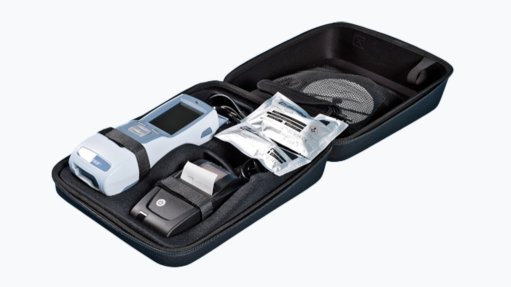
Developed to exceed the latest EN 15964 standards for police breathalysers proving that it will remain accurate and reliable for many years to come.
VISIT SHOWROOM
Design, Construction and Maintenance of Site Erected, Welded Bulk Storage Tanks for the Petrochemical, LNG, Ammonia and Sustainable fuel Sectors.
VISIT SHOWROOM

Announcements
What's On
Subscribe to improve your user experience...
Option 1 (equivalent of R125 a month):
Receive a weekly copy of Creamer Media's Engineering News & Mining Weekly magazine
(print copy for those in South Africa and e-magazine for those outside of South Africa)
Receive daily email newsletters
Access to full search results
Access archive of magazine back copies
Access to Projects in Progress
Access to ONE Research Report of your choice in PDF format
Option 2 (equivalent of R375 a month):
All benefits from Option 1
PLUS
Access to Creamer Media's Research Channel Africa for ALL Research Reports, in PDF format, on various industrial and mining sectors
including Electricity; Water; Energy Transition; Hydrogen; Roads, Rail and Ports; Coal; Gold; Platinum; Battery Metals; etc.
Already a subscriber?
Forgotten your password?
Receive weekly copy of Creamer Media's Engineering News & Mining Weekly magazine (print copy for those in South Africa and e-magazine for those outside of South Africa)
➕
Recieve daily email newsletters
➕
Access to full search results
➕
Access archive of magazine back copies
➕
Access to Projects in Progress
➕
Access to ONE Research Report of your choice in PDF format
RESEARCH CHANNEL AFRICA
R4500 (equivalent of R375 a month)
SUBSCRIBEAll benefits from Option 1
➕
Access to Creamer Media's Research Channel Africa for ALL Research Reports on various industrial and mining sectors, in PDF format, including on:
Electricity
➕
Water
➕
Energy Transition
➕
Hydrogen
➕
Roads, Rail and Ports
➕
Coal
➕
Gold
➕
Platinum
➕
Battery Metals
➕
etc.
Receive all benefits from Option 1 or Option 2 delivered to numerous people at your company
➕
Multiple User names and Passwords for simultaneous log-ins
➕
Intranet integration access to all in your organisation