SA's mining reset must put junior and artisanal miners at the centre

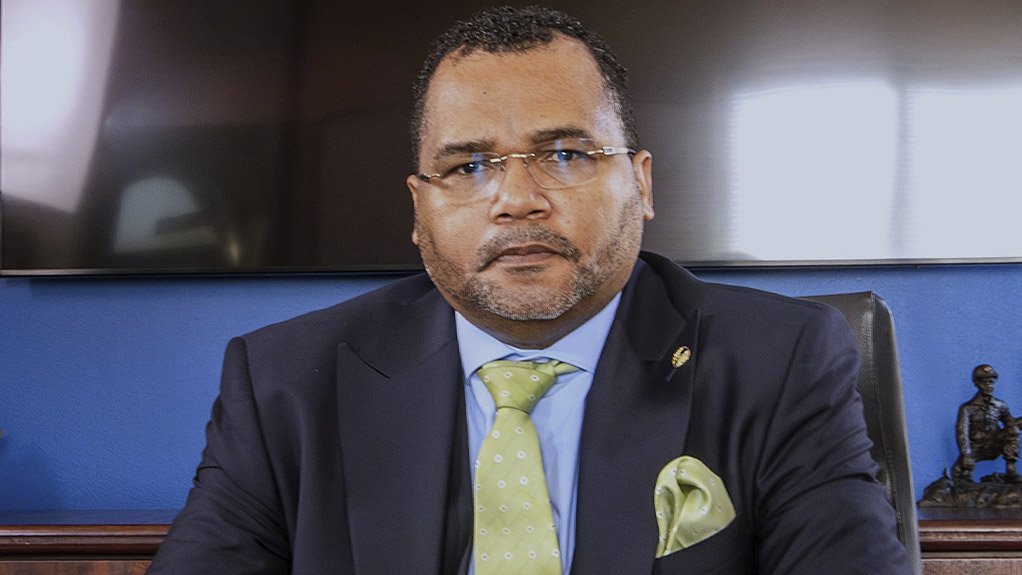



This article has been supplied.
By President of the Junior Mining Council Fred Arendse
A continental shift in mineral governance
Zambia’s recent cancellation of thousands of non‑performing mining licenses has sent a clear message across the continent: mineral rights must be actively developed, not merely held. This decisive step reflects a broader shift in African resource governance, where countries are beginning to prioritise performance, accountability, and national benefit over passive ownership. South Africa faces similar challenges, with dormant licenses, slow exploration, and rising unemployment limiting the sector’s potential.
A reset is possible and necessary, but it must be designed in a way that is inclusive, developmental, and empowering. Junior miners, artisanal miners, and local communities must be at the heart of this new chapter.
Junior miners as catalysts of inclusive growth
Junior miners play a critical role in opening new grounds, stimulating exploration, and creating opportunities in regions where major companies seldom invest. They bring agility, innovation, and local partnerships that strengthen the sector’s long‑term resilience. Yet they remain constrained by slow licensing processes, speculative license holders, and regulatory frameworks designed for large operators.
A new licensing round should prioritise junior miners who demonstrate capability, compliance, and community alignment, further open funding opportunities and strength capacity to execute. This approach supports early‑stage exploration, broadens participation, and strengthens South Africa’s mining pipeline.
Turning illegal mining into a formal economic engine
South Africa’s illegal mining crisis is often framed as a security threat, but it is also a symptom of unemployment, exclusion, and limited access to formal mining opportunities. Many of these miners possess practical skills and local geological knowledge.
The Draft Mineral and Petroleum Resources Development Bill, 2025 explicitly strengthens the regulatory framework to tackle illegal mining by broadening prohibitions on assisting illegal miners and prohibiting the transport of minerals without the prescribed documentation, thereby tightening enforcement and clarifying the criminal sanctions against unauthorised activities on mining rights areas. At the same time, the Bill introduces a formal licensing regime for artisanal and small-scale mining, complete with defined artisanal mining permits and demarcated Artisanal and Small-Scale Mining (ASM) zones, transforming previously informal operations into legally recognised and regulated activities.
This dual approach not only enhances state capacity to curb illegal mining, but also offers a legitimate pathway for the co-existence between large-scale mining companies and ASM actors by bringing ASM into the formal economy — where health, safety, environmental, and labour standards can be enforced, and where collaboration with LSM operators can be facilitated through clearly defined rights, consultation obligations, and shared regulatory oversight.
Several African countries have already demonstrated that artisanal mining can be formalised and integrated into the national economy:
- Ghana has established community‑based small‑scale mining cooperatives.
- Tanzania has created designated artisanal mining zones supported by technical assistance.
- Rwanda has formalised small‑scale mining through licensing, training, and cooperative structures.
- Ethiopia has integrated artisanal miners into national mineral value chains through structured support programmes.
These models show that formalisation is not only possible, but economically beneficial.
Transformation as a guiding principle.
A licensing reset must support South Africa’s transformation goals. BBBEE should guide the allocation of new licenses by prioritising local people, local communities, youth, women, and junior miners with strong empowerment credentials. This ensures that mineral development contributes to inclusive growth and that communities benefit from the resources found on their land.
A performance‑based licensing system
A modern mining economy requires a licensing system that rewards development and accountability. This includes clear timelines, measurable milestones, transparent reporting, community engagement obligations, environmental compliance, and capital deployment requirements.
To supports national development and unlock dormant value deliberate efforts should be invested to capacitate or to help with compliance and funding to those can.
A balanced path forward
South Africa stands at an important moment. The country can maintain a system that limits participation and leaves communities behind, or it can adopt a model that empowers junior miners, formalises artisanal mining, strengthens transformation, unlocks dormant assets, rebuilds investor confidence, stimulates regional economies, and creates jobs at scale.
Zambia has demonstrated what decisive action looks like. South Africa can build on that example by designing a system that is not only efficient, but also inclusive and grounded in local realities. A new mining era is within reach — one that grows from the ground up and places people, communities, and opportunity at its centre.
The JMC strongly supports this vision of a new mining era. JMC believes that empowering junior miners and formalising artisanal operations are not peripheral reforms — they are central to revitalising the sector. A thriving junior mining ecosystem strengthens exploration, unlocks new discoveries, de-risks the pipeline for larger producers, and anchors long-term sector sustainability.
The opportunity is clear. With the right policy choices, regulatory reform, and political will, South Africa can usher in a new mining era — one that grows from the ground up, restores confidence, attracts investment, and places people, communities, and shared prosperity at its centre. The time for incremental adjustments has passed. The time for bold, inclusive reform is now.
Article Enquiry
Email Article
Save Article
Feedback
To advertise email advertising@creamermedia.co.za or click here
Research Reports

Projects

Latest Multimedia

Latest News
Showroom
Columbus Stainless, based in Middelburg, Mpumalanga, is Africa’s only producer of stainless steel flat products. In addition, Columbus is the only...
VISIT SHOWROOM
The SAIMM started as a learned society in 1894 after the invention of the cyanide process that saved the South African gold mining industry of the...
VISIT SHOWROOM
Press Office
Announcements
What's On
Subscribe to improve your user experience...
Option 1 (equivalent of R125 a month):
Receive a weekly copy of Creamer Media's Engineering News & Mining Weekly magazine
(print copy for those in South Africa and e-magazine for those outside of South Africa)
Receive daily email newsletters
Access to full search results
Access archive of magazine back copies
Access to Projects in Progress
Access to ONE Research Report of your choice in PDF format
Option 2 (equivalent of R375 a month):
All benefits from Option 1
PLUS
Access to Creamer Media's Research Channel Africa for ALL Research Reports, in PDF format, on various industrial and mining sectors
including Electricity; Water; Energy Transition; Hydrogen; Roads, Rail and Ports; Coal; Gold; Platinum; Battery Metals; etc.
Already a subscriber?
Forgotten your password?
Receive weekly copy of Creamer Media's Engineering News & Mining Weekly magazine (print copy for those in South Africa and e-magazine for those outside of South Africa)
➕
Recieve daily email newsletters
➕
Access to full search results
➕
Access archive of magazine back copies
➕
Access to Projects in Progress
➕
Access to ONE Research Report of your choice in PDF format
RESEARCH CHANNEL AFRICA
R4500 (equivalent of R375 a month)
SUBSCRIBEAll benefits from Option 1
➕
Access to Creamer Media's Research Channel Africa for ALL Research Reports on various industrial and mining sectors, in PDF format, including on:
Electricity
➕
Water
➕
Energy Transition
➕
Hydrogen
➕
Roads, Rail and Ports
➕
Coal
➕
Gold
➕
Platinum
➕
Battery Metals
➕
etc.
Receive all benefits from Option 1 or Option 2 delivered to numerous people at your company
➕
Multiple User names and Passwords for simultaneous log-ins
➕
Intranet integration access to all in your organisation