Panel mulls solutions to better coordinate gas development in South Africa

Industry experts unpack the imperative and considerations to accelerate gas developments in South Africa
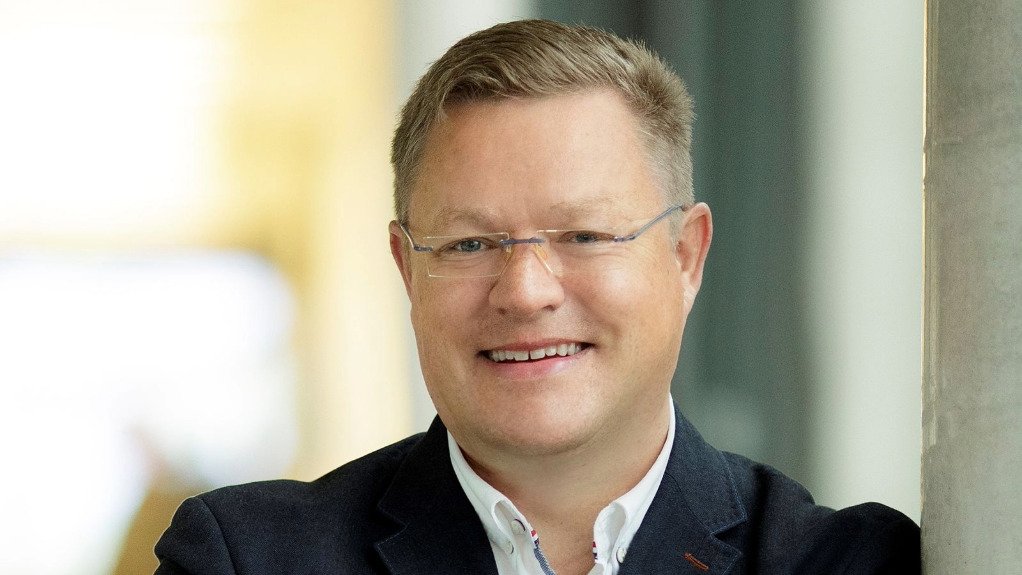
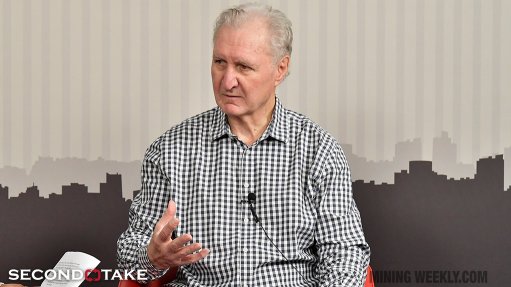
Industrial Gas Users Association of South Africa executive director Jaco Human




As gas receives more attention as a source of baseload electricity in South Africa and as the country nears a gas cliff for industrial users, there has been uncertainty about the required mix of gas-to-power projects, the load factors desired and whether open-cycle gas turbines or combined-cycle gas power plants are needed.
During a webinar hosted by Creamer Media on March 25, experts unpacked the considerations for gas as a promising option to ensure energy security in the country, as well as the challenges to practically realise projects.
The panel of experts agreed that as more renewable energy generation capacity came online, dispatchable generation was needed to offset their variability. In particular, said Industrial Gas Users Association of South Africa executive officer and panel facilitator Jaco Human, the country had moved beyond the question of whether gas was required to how it could be enabled and implemented.
The panel members, including GasHub chairperson Thomas Shaw, Standard Bank Southern Africa oil and gas head Paul Eardley-Taylor, Republic of Mozambique Pipeline Investments Company (Rompco) commercial and stakeholder management GM Motlokwe Sebake and Phakwe Group founder and executive chairperson Thabiso Tenyane, agreed that the gas development process was currently uncoordinated.
Tenyane pointed out that South Africa's Gas Master Plan was still under development, which left the Integrated Resource Plan 2025 for guidance, meaning the timelines were not aligned to what needed to be achieved. He said government administrations and even different departments had had varying commitments to enabling gas-to-power projects, which led to investment uncertainty and delays.
Tenyane called for an intentional effort to deal with the looming gas cliff and pointed to the need for cleaner baseload electricity that offset the variability of renewables, warning that South Africa would suffers immense economic impact if it failed to address the challenge.
He distinguished between the two types of gas plants that could be built: open-cycle gas turbines with fast startup times used for peak power supply and emergency backup during high demand, and combined-cycle gas turbines that were oriented to being baseload sources of energy and which were not amenable to stop-start operations.
“What does the country need? Make this distinction and then align timelines to that,” Tenyane emphasised.
Human agreed, saying there were solutions on the table and willing investors, but more coordinated engagement was needed.
Sebake elaborated on the sentiment by calling for a national high-level government commitment similar to the National Energy Crisis Committee for gas.
Eardley-Taylor was of the view that National Treasury should be driving gas coordination since it knew the fiscal cost of the country not having enough electricity. Shaw said the involvement of the Presidency was needed to cut across energy generation, environment and gas policy for faster implementation.
Tenyane countered this by saying that the Energy and Electricity Minister ought to be competent enough to drive gas coordination and resolve the matter as one of urgency – or propose another viable alternative. In fact, Tenyane said the agreements that the President had with the Ministers should be published openly to evaluate what had been agreed and whether Ministers were meeting expectations.
For Eardley-Taylor, there was uncertainty around gas-to-power plant load factors, as well as details of actual demand, noting that load factors directly dictate the economic viability, operational efficiency and profitability of gas-to-power plants.
Load factors represent the ratio of the actual energy produced by a plant over a period compared with its maximum possible output if run at full capacity continuously.
A higher, steadier load factor means the power plant is a reliable contributor to the grid, avoiding sudden peaks and valleys in production that strain transmission infrastructure.
Tenyane echoed this sentiment by saying certain committed volumes of molecules would help facilitate infrastructure developments, while ensuring that companies avoided expensive storage costs if load factors could not be clearly projected.
Shaw agreed, saying the country needed to commit to a demand profile since the large gas user industry was too small to do that by itself. “Once that is done, fiscal support is needed to underwrite the infrastructure that allows gas to flow. In both those cases we need clear timelines and hard commitment beyond policy positions.”
Sebake said that, Rompco, as a midstream company, was heavily reliant on decisions on the supply side (upstream gas industry) and the end-users of gas (downstream), but he was confident the company was ready to support different gas solutions once more projects came to light. He said the gas sector could only be grown through regional collaboration – much like how Rompco started as a bilateral agreement between South Africa, Mozambique and Sasol.
Shaw mentioned that it could be a long-term, cost-effective solution if Rompco were to be expanded to Namibia and include the Orange River Basin gas prospects.
Eardley-Taylor concluded that once the planned gas import terminal, Zululand Energy Terminal, was in place in Richards Bay, it could build confidence in the market and more demand would follow from small-scale liquefied natural gas operations or new independent power producers.
Article Enquiry
Email Article
Save Article
Feedback
To advertise email advertising@creamermedia.co.za or click here
Research Reports

Projects


Latest Multimedia

Latest News


Showroom
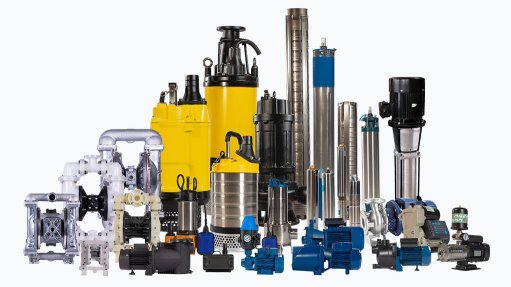
AxFlow AQS Liquid Transfer (Pty) Ltd is an Importer and Distributor of Pumps in Southern Africa
VISIT SHOWROOM
ATI systems comprises five divisions: electrical assemblies, drives and controls, feedback sensors, enclosures, and strip guiding.
VISIT SHOWROOM

Announcements
What's On
Subscribe to improve your user experience...
Option 1 (equivalent of R125 a month):
Receive a weekly copy of Creamer Media's Engineering News & Mining Weekly magazine
(print copy for those in South Africa and e-magazine for those outside of South Africa)
Receive daily email newsletters
Access to full search results
Access archive of magazine back copies
Access to Projects in Progress
Access to ONE Research Report of your choice in PDF format
Option 2 (equivalent of R375 a month):
All benefits from Option 1
PLUS
Access to Creamer Media's Research Channel Africa for ALL Research Reports, in PDF format, on various industrial and mining sectors
including Electricity; Water; Energy Transition; Hydrogen; Roads, Rail and Ports; Coal; Gold; Platinum; Battery Metals; etc.
Already a subscriber?
Forgotten your password?
Receive weekly copy of Creamer Media's Engineering News & Mining Weekly magazine (print copy for those in South Africa and e-magazine for those outside of South Africa)
➕
Recieve daily email newsletters
➕
Access to full search results
➕
Access archive of magazine back copies
➕
Access to Projects in Progress
➕
Access to ONE Research Report of your choice in PDF format
RESEARCH CHANNEL AFRICA
R4500 (equivalent of R375 a month)
SUBSCRIBEAll benefits from Option 1
➕
Access to Creamer Media's Research Channel Africa for ALL Research Reports on various industrial and mining sectors, in PDF format, including on:
Electricity
➕
Water
➕
Energy Transition
➕
Hydrogen
➕
Roads, Rail and Ports
➕
Coal
➕
Gold
➕
Platinum
➕
Battery Metals
➕
etc.
Receive all benefits from Option 1 or Option 2 delivered to numerous people at your company
➕
Multiple User names and Passwords for simultaneous log-ins
➕
Intranet integration access to all in your organisation