National Rail Bill being prepared in bid to embed reforms – Creecy

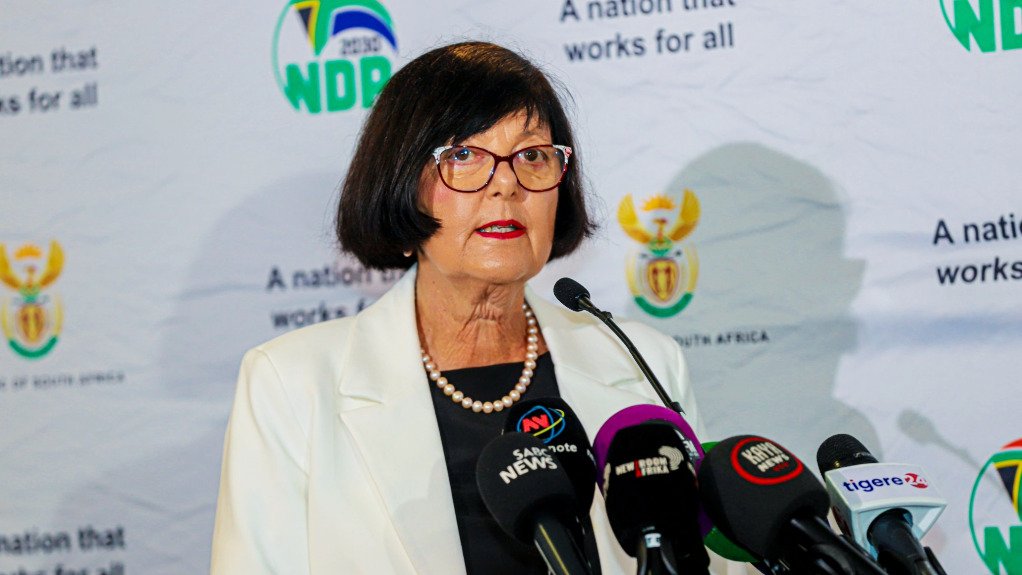



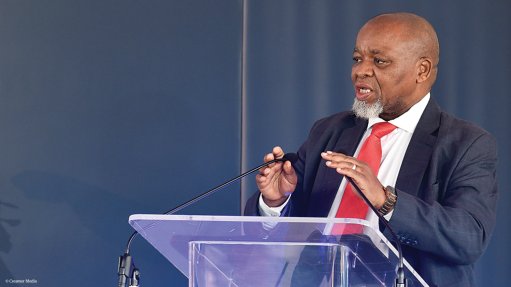
Transport Minister Barbara Creecy reports that she intends seeking Cabinet approval for a new National Rail Bill during the 2026/27 financial year and that the Bill will aim to embed in legislation the reforms under way opening the sector to private participation.
The Bill would then be released for public consultation and be subjected to the Parliamentary processes required for legislative approval.
Creecy told rail industry stakeholders that such legislation was required to address any possible uncertainty about whether the reform process currently under way in the sector would be sustained under future governments.
These reforms were currently being guided by the National Rail Policy, which is facilitating an opening of the mainline network to the first private train operating companies (TOCs).
To date, the Transnet Rail Infrastructure Manager (TRIM), which has been vertically separated from the Transnet Freight Rail Operating Company, has identified 11 TOCs that have met the requirements to operate 41 slots on six corridors.
The first TOCs are expected to begin operating in April 2027 and should all 11 TOCs achieve financial close they are expected to add a combined 20-million tons of additional rail volumes.
“One of the questions that is very important in any rail reform process, or indeed in any reform process, is: how are we embedding the changes that we see now for the long term, and how certain can you be that, if there is a change of government, you would not be finding that this policy changes?”
“That is why we’re in the process of developing the National Rail Bill, so that we will have a law to express the imperatives and the priorities of the National Rail Policy,” Creecy told industry stakeholders on March 26.
“Our intention is to take this Bill to Cabinet during the financial year, and once Cabinet has approved, we will then gazette the Bill for formal public consultation.”
In the meantime, the network would continue to be opened to third-party operators in line with the National Rail Policy and supported by the reform programme being driven through Operation Vulindlela.
Updated Network Statement
Creecy said that the TRIM was also in the process of finalising an update to the Network Statement, which outlines the condition of the network, its capacity to accommodate TOCs, and the tariffs for accessing the network.
The intention was for the new 2026/27 statement to be in place for a two-year period to facilitate the introduction of additional TOCs, with the first statement having been published in 2024.
There were also moves under way to separate financing of operations from rolling stock so as to create an opportunity for new, less well-capitalised operators to enter the network using leased locomotive and wagons.
Transnet has indicated that it plans to establish a leasing company to provide rolling stock to TOCs and has initiated a process to shortlist possible private partners for such an entity.
While the Transport Economic Regulator was not yet in place, Creecy said interim regulatory capacity had been developed to approve the tariffs associated with accessing the network.
She, thus, urged stakeholders to comment on the content of the updated Network Statement when it was released, as it required approval by the interim regulator ahead of implementation.
The introduction of TOCs was viewed as crucial to meeting the target of raising rail volumes to 250-million by the end of the decade, from about 160-million tons currently.
It is estimated that Transnet Freight Rail could recover its volumes to about 185- million, leaving 65-million tons for the TOCs to achieve.
Achieving those additional volumes would require rail securing more container volumes from road, a development that commentators say will be possible only if there is far better spatial planning to support a shift from road to rail.
Creecy said research by her department indicated that a restoration of the rail system could enable a modal shift of at least 60-million tons, which could save South African businesses an estimated R26.6-billion yearly in direct logistics costs.
Article Enquiry
Email Article
Save Article
Feedback
To advertise email advertising@creamermedia.co.za or click here
Research Reports

Projects


Latest Multimedia

Latest News
Showroom
Roytec Global is an international company specializing in liquid / solid and mineral separation technologies for the Mining and Industrial sectors.
VISIT SHOWROOM
Electrifying the world in a safe, smart, and sustainable way, ABB Electrification is a global technology leader in electrical distribution and...
VISIT SHOWROOM
Press Office
Announcements
What's On
Subscribe to improve your user experience...
Option 1 (equivalent of R125 a month):
Receive a weekly copy of Creamer Media's Engineering News & Mining Weekly magazine
(print copy for those in South Africa and e-magazine for those outside of South Africa)
Receive daily email newsletters
Access to full search results
Access archive of magazine back copies
Access to Projects in Progress
Access to ONE Research Report of your choice in PDF format
Option 2 (equivalent of R375 a month):
All benefits from Option 1
PLUS
Access to Creamer Media's Research Channel Africa for ALL Research Reports, in PDF format, on various industrial and mining sectors
including Electricity; Water; Energy Transition; Hydrogen; Roads, Rail and Ports; Coal; Gold; Platinum; Battery Metals; etc.
Already a subscriber?
Forgotten your password?
Receive weekly copy of Creamer Media's Engineering News & Mining Weekly magazine (print copy for those in South Africa and e-magazine for those outside of South Africa)
➕
Recieve daily email newsletters
➕
Access to full search results
➕
Access archive of magazine back copies
➕
Access to Projects in Progress
➕
Access to ONE Research Report of your choice in PDF format
RESEARCH CHANNEL AFRICA
R4500 (equivalent of R375 a month)
SUBSCRIBEAll benefits from Option 1
➕
Access to Creamer Media's Research Channel Africa for ALL Research Reports on various industrial and mining sectors, in PDF format, including on:
Electricity
➕
Water
➕
Energy Transition
➕
Hydrogen
➕
Roads, Rail and Ports
➕
Coal
➕
Gold
➕
Platinum
➕
Battery Metals
➕
etc.
Receive all benefits from Option 1 or Option 2 delivered to numerous people at your company
➕
Multiple User names and Passwords for simultaneous log-ins
➕
Intranet integration access to all in your organisation