More PGM potential for South Africa as Palladium Center returns with major new insight

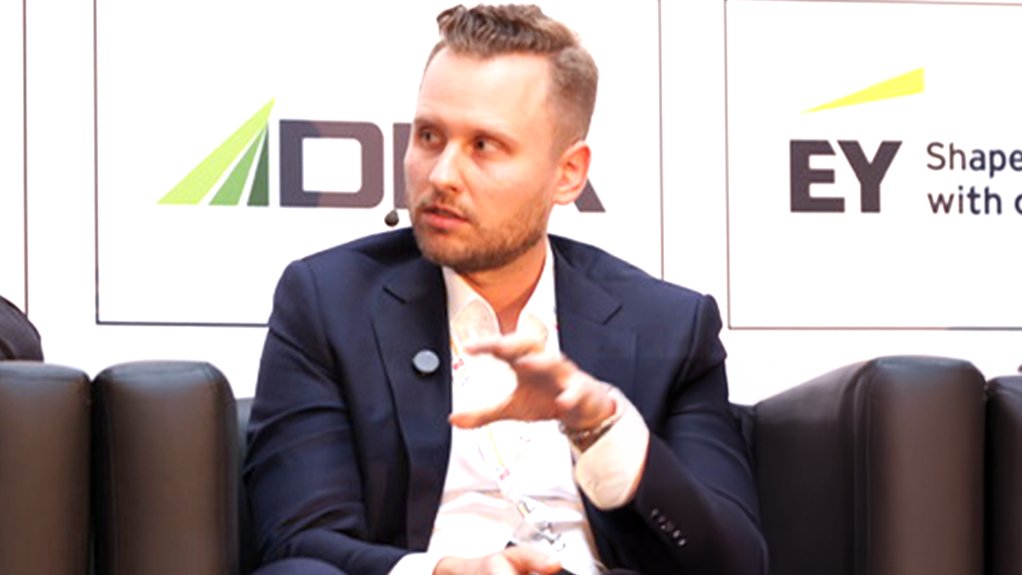


JOHANNESBURG (miningweekly.com) – One sensed at last year's PGMs Industry Day that Nornickel’s Palladium Center would be back this year with many more growth opportunities for South Africa’s platinum group metals (PGMs).
That expectation turned out to be spot on when Dmitry Izotov, the director of Nornickel's Palladium Center, outlined the three-year-old centre’s long list of advancing new palladium applications at this year’s high-spirited PGMs Industry Day, where PGM-linked hydrogen expectations also resurfaced, amid Northam Platinum's first-hand witnessing of hydrogen fuel cell mobility on an information-gathering visit to China.
Speaking during a panel discussion on quantifying PGMs demand in non-automotive applications, Izotov focused on three potential major long-term growth areas where the Palladium Center is concentrating development efforts.
The first of these is a focus on solar power, which was hailed as "the main alternative source of energy, the future source of energy”.
Putting forward his contentions that current silicon solar cells have reached a maximum efficiency of around 30% and describing their thickness as rendering them relatively costly to produce, Izotov reported a transitioning to tandem PV panels that combine silicon with perovskite materials. "The perovskite has a wider fill factor, so it can better catch the light during sunset and sunrise," Izotov reported. On that basis, PV panels that combine silicon with perovskite materials uplift efficiency and cuts costs because of their thinness.
Of the two types of palladium-based products that are being developed for the solar sector, the first is an additive to the perovskite active layer that has already demonstrated a 15% efficiency boost during testing, and the second is a tandem cell configuration with three palladium layers designed to address lifespan issues by leveraging palladium's proven barrier function characteristics for microelectronics applications.
"We really think it's a big opportunity for palladium, because currently in China the largest solar panel producers don't have this technology ready. By the end of the year, we'll have the first prototype and we expect to distribute these technologies to the big Chinese market," the Palladium Center CEO explained.
The centre's projected new demand for solar-linked palladium is 0.5-million to one-million ounces a year from around 2030 to 2035.
MICROELECTRONICS
Microelectronics, where gold dominates with nine-million ounces of annual demand, was highlighted as a second potential major long-term growth area. "It's nine-million ounces, so it's like palladium's total demand. For our PGM metals, it's a huge opportunity and a huge market," Izotov enthused.
With data centres for artificial intelligence (AI) driving demand for next-generation printed circuit boards and high gold prices creating cost pressures, two product streams are being developed, one being new gold-palladium layer combinations that reduce gold content while increasing palladium, and the other using palladium-copper bonding wires to replace gold-based applications.
While there is room for more gold reduction, gold will remain a perfect metal in terms of electroconductivity and corrosion resistance, but in smaller volumes.
The projected new demand for microelectronics-linked palladium is for at least one-million ounces a year, again from around the years 2030 to 2035.
LITHIUM-SULPHUR BATTERIES
The third potential major long-term growth area is in lithium-sulphur battery technology, which the Palladium Center sees as offering advantages over lithium-ion batteries in several fields of application owing to lithium sulphur being cheaper, lighter and a higher density than lithium-ion. The shorter lifespan of lithium-sulphur batteries is being dealt with by palladium-based catalysts for both electrolyte and cathode to neutralise sulphur's side effects.
The projected new palladium demand for lithium-ion batteries is expected to be a minimum of 1.5-million ounces a year after market entry.
AI-DRIVEN MATERIALS DEVELOPMENT
In focusing on generative AI for materials discovery, parallels to pharmaceutical breakthroughs have been drawn in that the creation of AlphaFold to predict proteins' three-dimensional structure has expanded the protein database from 190 000 to 200-million entries.
Nornickel is developing a proprietary AI platform for predicting properties of PGM non-organic materials and alloys, based on a vast dataset of test results and industrial information.
Models based on AI can significantly streamline the search for palladium–carbon‑nanotube composites by predicting their electroconductivity and interface stability, as well as the optimal form, position and size at which carbon nanotubes should be distributed within the palladium crystal structure. The resulting composite will have better conductivity, which positions palladium as a viable replacement for the nine-million ounces of gold consumed annually in the microelectronics industry.
Collaboration with teams from a material science university teams is taking place to develop an AI platform for palladium and PGM-based materials, though it is acknowledged that the challenge is greater than in pharmaceuticals, owing to “limited real-world experimental data”.
BEYOND AUTO DOMINANCE
The Palladium Center was established in 2023 in response to automotive electrification trends. "We understood that we needed to launch some massive market development programme to support palladium in new industrial applications," Izotov recalled, "because we understood that platinum was already pretty diversified, but for palladium the biggest share of the market was always autocatalysts."
The centre, as reported last year by Mining Weekly, set a target to create 1.7-million ounces of new annual palladium demand by launching 15 new projects annually for commercially viable palladium-based materials. This has been achieved in that 30 projects spanning various application areas are now active.
GLASS INDUSTRY
The glass industry represents the most advanced market development effort. Currently, eight-million ounces of primarily platinum and rhodium are used in fiberglass, optical, technical, and display glass production.
Developed are palladium-platinum alloys strengthened with special additives to address palladium's lower melting point and reduced stability at the high temperatures required for glass production (1 300 °C for fiberglass).
Commercial traction is accelerating. In 2025, Chinese companies purchased 20 000 oz of palladium for the first installation phase of fiberglass production leads. Three hundred days of industrial testing at one of China's largest production facilities proved successful, and the industry is now transitioning to palladium-based leads.
Major industrial testing of the main palladium-platinum alloys for bushings, which is scheduled to begin next month, will continue throughout the year.
Projected demand is 0.8-million ounces from adoption of fiberglass bushings in China and up to two-million ounces is the total potential across fiberglass, optical, technical, and display glass.
The fast adoption cycle is aided by fiberglass equipment's one-year lifespan, enabling rapid switching compared with some oil and chemical catalysts that have eight-year lifecycles.
ELECTROCHEMISTRY
The three-component palladium-iridium-ruthenium anodes that have been developed reduce scarce iridium content, which renders the anodes 15% cheaper and 20% more energy efficient than conventional iridium-ruthenium anodes, with applications spanning f cathode nickel production, copper foil manufacturing, water disinfection, and chloralkali processes.
Commercial installations of palladium-based anodes for water disinfection are already operating in water treatment plants, with development work continuing on the remaining applications.
Projected new mid-term palladium demand from electrochemistry is from 0.2-million to 0.3-million ounces.
DEVELOPMENT APPROACH
Nornickel’s hybrid research and development model involves partnering with external scientific groups for each specific project, while fundamental palladium competencies are maintained through a palladium laboratory, which uses AI-enhanced capabilities for developing catalysts, alloys, and functional materials.
This approach has accelerated time-to-market significantly, with lab prototypes being made in nine months compared with 18 to 24 months. The electrochemistry water disinfection project moved from concept to 500 installed anodes in 14 months, compared with a typical five to ten years.
Nornickel does not build production facilities. Instead, the company's lifecycle ends when it provides production licenses to other manufacturers. Teams are deployed to make laboratory prototypes and for semi-industrial scale-up, with prototypes forwarded for testing.
INVESTMENT AND PRODUCTION CONTEXT
Nornickel has committed $100-million to the first phase of its palladium demand development programme amid the company producing 85 t, or 2.7-million ounces, of palladium a year, which represents roughly 40% of global primary palladium production.
More than half of the metals basket goes to Asia, primarily China, up from 25% previously.
The 1.7-million-ounce target represents demand creation for the global palladium market.
Global palladium demand totals 250 t, or nine-million ounces, with about 80% currently consumed by autocatalysis.
MARKET OUTLOOK
Slower-than-expected battery electric vehicle adoption is anticipated, with growing hybrid vehicle penetration benefitting palladium demand owing to hybrids requiring both catalysts and nickel batteries.
Demand diversification beyond autocatalysis is gradually increasing as palladium finds applications in glass, electrochemistry, and emerging technologies.
In the longer term, new demand development through the Palladium Center's applications portfolio is viewed as being key to maintaining market balance.
The PGMs Industry Day in Johannesburg brought together CEOs and senior executives from major producers including Valterra Platinum, Implats, Sibanye-Stillwater, Zimplats, Ivanhoe Mines, African Rainbow Minerals, and Southern Palladium, alongside representatives from Umicore, Toyota, Heraeus, McKinsey, Standard Chartered, and other industry participants.
Discussion topics spanned the PGM market cycle, the impact of high precious metals prices on demand patterns, hybrid vehicle prospects, and new technology directions that embraced hydrogen energy, solar power, microelectronics, and other industrial applications that take PGMs beyond the domination of automotive catalysis.
Article Enquiry
Email Article
Save Article
Feedback
To advertise email advertising@creamermedia.co.za or click here

Projects

Latest Multimedia

Latest News
Showroom
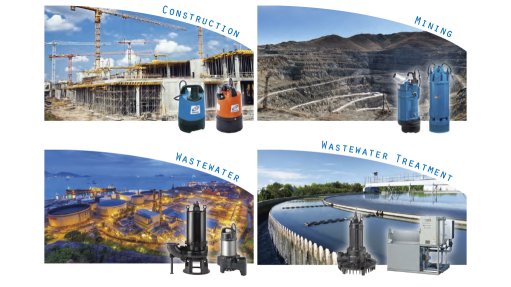
Tsurumi Pumps Africa is a specialist supplier of Japanese-engineered submersible pumping solutions, serving customers across the African continent.
VISIT SHOWROOM
Your global lifecycle technology & service partner for materials & minerals processing equipment for coal, iron ore, copper, manganese & other...
VISIT SHOWROOM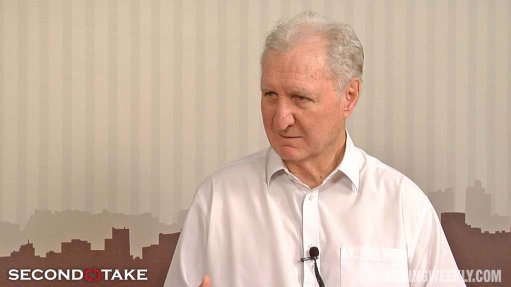



Announcements
What's On
Subscribe to improve your user experience...
Option 1 (equivalent of R125 a month):
Receive a weekly copy of Creamer Media's Engineering News & Mining Weekly magazine
(print copy for those in South Africa and e-magazine for those outside of South Africa)
Receive daily email newsletters
Access to full search results
Access archive of magazine back copies
Access to Projects in Progress
Access to ONE Research Report of your choice in PDF format
Option 2 (equivalent of R375 a month):
All benefits from Option 1
PLUS
Access to Creamer Media's Research Channel Africa for ALL Research Reports, in PDF format, on various industrial and mining sectors
including Electricity; Water; Energy Transition; Hydrogen; Roads, Rail and Ports; Coal; Gold; Platinum; Battery Metals; etc.
Already a subscriber?
Forgotten your password?
Receive weekly copy of Creamer Media's Engineering News & Mining Weekly magazine (print copy for those in South Africa and e-magazine for those outside of South Africa)
➕
Recieve daily email newsletters
➕
Access to full search results
➕
Access archive of magazine back copies
➕
Access to Projects in Progress
➕
Access to ONE Research Report of your choice in PDF format
RESEARCH CHANNEL AFRICA
R4500 (equivalent of R375 a month)
SUBSCRIBEAll benefits from Option 1
➕
Access to Creamer Media's Research Channel Africa for ALL Research Reports on various industrial and mining sectors, in PDF format, including on:
Electricity
➕
Water
➕
Energy Transition
➕
Hydrogen
➕
Roads, Rail and Ports
➕
Coal
➕
Gold
➕
Platinum
➕
Battery Metals
➕
etc.
Receive all benefits from Option 1 or Option 2 delivered to numerous people at your company
➕
Multiple User names and Passwords for simultaneous log-ins
➕
Intranet integration access to all in your organisation