Middle East conflict drives renewed interest in shale exploration in some countries

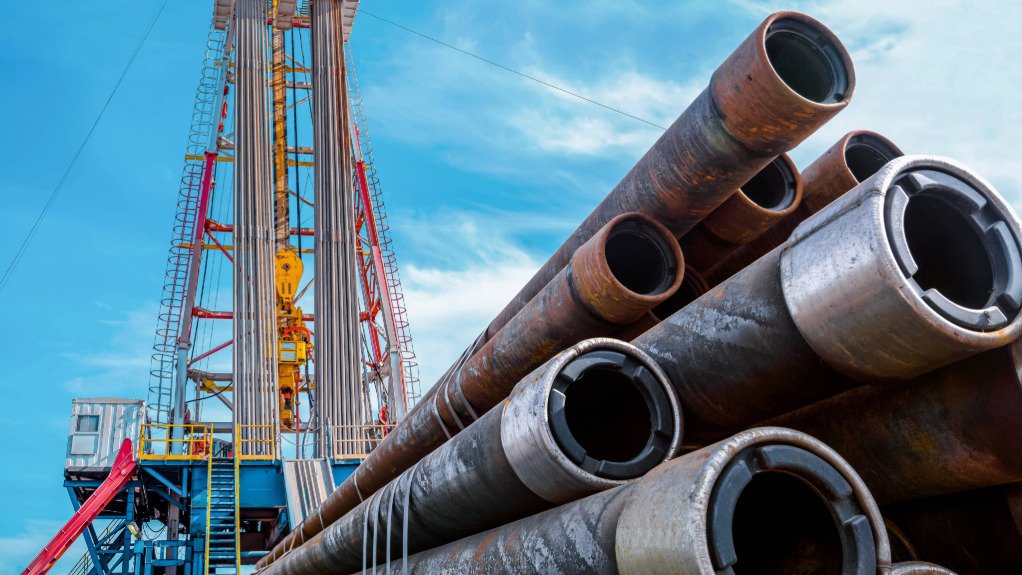


Amid conflict in the Middle East, a new research paper from energy consultancy Wood Mackenzie (WoodMac) has highlighted the importance of elevating strategic energy security priorities as countries seek supply diversification.
The consultancy states in its ‘A hydrocarbon copy: the upstream industry’s return to international shale exploration’ paper that international shale exploration can play a key role in meeting those goals.
Six countries are advancing unconventional resource development to help address energy security objectives.
Algeria leads for European supply diversification, while the United Arab Emirates (UAE), Mexico, Australia, Türkiye and Indonesia pursue domestic energy strategies through international partnerships and technology deployment.
Algeria hosts vast reserves, and the Lower Silurian shale between North Africa and the Middle East offers piped export potential. Multinational energy companies ExxonMobil and Chevron have exploration partnerships, though oilfield service bottlenecks need to be resolved.
On targeting energy independence, the UAE’s Abu Dhabi National Oil Company is moving toward final investment decisions for unconventional gas to support a 2030 self-sufficiency target, with drilling potentially exceeding 300 wells each year.
In Mexico, gas company Pemex has set 2030 shale gas and tight oil targets amid US trade tensions, while in Australia, the Beetaloo shale gas project, in the Northern Territory, is targeting liquefied natural gas (LNG) backfill and east coast market supply.
In Türkiye, oil company Continental Resources is working in the Diyarbakir and Thrace basins and advancing exploration at an accelerated pace compared with earlier efforts by other companies.
Meanwhile, in Indonesia, regulators are seeking US participation in the Sumatra basin tight oil sector, with targets including lacustrine sediments once thought too challenging but proven viable by the Uinta basin in the US.
WoodMac also points out that a mix of subsurface and regulatory challenges slowed international shale progress in the 2010s, but the evolving Permian basin opportunity proved decisive. The consultancy also notes that companies ended global shale exploration and pivoted to West Texas in the US for lower-risk and lower-cost growth.
Eight energy companies that once led global shale exploration – ExxonMobil, Chevron, Shell, bp, ConocoPhillips, Marathon, EOG and APA Corporation – spent $230-billion acquiring and developing Permian positions between 2012 and 2025.
Breakevens were driven down by more efficient operations and dramatically improved well recoveries, positioning the Permian lower on the global cost curve.
WoodMac adds that global shale exploration also suffered from a lack of focus over the last decade, with companies currently evaluating about 20 high-grade plays, compared with the more than 100 assessed over the last decade.
"Explorers know the countries to avoid. Bans on hydraulic fracturing or unworkable fiscal terms will make certain projects impossible. Companies also have a better understanding of supply-chain risks, such as red tape that restricts the import of critical drilling and completion equipment," says WoodMac upstream research VP Robert Clarke.
Continental Resources entered Argentina's Vaca Muerta oil- and gasfield through multiple deals and formed an unconventional joint venture with Türkiye’s State oil company.
American energy company EOG Resources has made unconventional entries into Bahrain and the UAE. Some plays being studied are assets EOG has already evaluated during the first wave of global shale exploration, and majors, international oil companies and national oil companies are all participating.
Further, WoodMac notes that Argentina's Vaca Muerta and Saudi Arabia's Jafurah gasfields demonstrate achievable scale in plays outside North America.
The consultancy also highlights that, when combined, these projects will produce more than 2.5-million barrels of oil a day in the next decade and absorb $250-billion in future capital expenditure, adding that Jafurah and Vaca Muerta prove that public companies, private investors and national oil companies can all participate.
"Countries seeking to commercialise projects must customise fiscal arrangements, terms for work programmes and licensing. Where there is alignment with national interest and the will to make these projects succeed, incentives for investment will follow," says WoodMac senior research analyst Josh Dixon.
"The greatest advantage for global shale 2.0 is that there is no new US play on the scale of the Permian basin to compete for future short cycle capital," says Clarke.
“US shale drove growth over two decades nearly equal to the next ten countries combined – that is the scale energy-thirsty economies abroad want to replicate. Technology has pushed costs down across all US shale basins.
“Where host governments align unconventional development with national energy security and provide fast regulatory timelines, investment and expertise will follow," Clarke concludes.
Article Enquiry
Email Article
Save Article
Feedback
To advertise email advertising@creamermedia.co.za or click here
Research Reports

Projects
Latest Multimedia

Latest News
Showroom

For over 60 years, VEGA has provided industry-leading products for the measurement of level, density, weight and pressure. As the inventor of the...
VISIT SHOWROOM


Announcements
What's On
Subscribe to improve your user experience...
Option 1 (equivalent of R125 a month):
Receive a weekly copy of Creamer Media's Engineering News & Mining Weekly magazine
(print copy for those in South Africa and e-magazine for those outside of South Africa)
Receive daily email newsletters
Access to full search results
Access archive of magazine back copies
Access to Projects in Progress
Access to ONE Research Report of your choice in PDF format
Option 2 (equivalent of R375 a month):
All benefits from Option 1
PLUS
Access to Creamer Media's Research Channel Africa for ALL Research Reports, in PDF format, on various industrial and mining sectors
including Electricity; Water; Energy Transition; Hydrogen; Roads, Rail and Ports; Coal; Gold; Platinum; Battery Metals; etc.
Already a subscriber?
Forgotten your password?
Receive weekly copy of Creamer Media's Engineering News & Mining Weekly magazine (print copy for those in South Africa and e-magazine for those outside of South Africa)
➕
Recieve daily email newsletters
➕
Access to full search results
➕
Access archive of magazine back copies
➕
Access to Projects in Progress
➕
Access to ONE Research Report of your choice in PDF format
RESEARCH CHANNEL AFRICA
R4500 (equivalent of R375 a month)
SUBSCRIBEAll benefits from Option 1
➕
Access to Creamer Media's Research Channel Africa for ALL Research Reports on various industrial and mining sectors, in PDF format, including on:
Electricity
➕
Water
➕
Energy Transition
➕
Hydrogen
➕
Roads, Rail and Ports
➕
Coal
➕
Gold
➕
Platinum
➕
Battery Metals
➕
etc.
Receive all benefits from Option 1 or Option 2 delivered to numerous people at your company
➕
Multiple User names and Passwords for simultaneous log-ins
➕
Intranet integration access to all in your organisation