Hydrogen option highlighted as Middle East crisis disrupts fossil-fuel economics

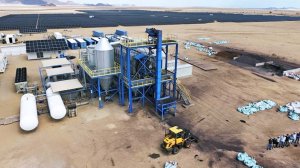


JOHANNESBURG (miningweekly.com) – South Africa’s Presidency has been advised to reduce dependency on imported fossil fuels as current events may alter the economics of alternative fuel sources such as green hydrogen and green ammonia, for the production of which South Africa enjoys competitive advantages, Business Day reported on Monday, April 13.
Forming part of a summary of priority decisions is that there must be less reliance placed on imported fuels and greater emphasis placed on energy independence.
Coinciding with this on Monday was a report World Platinum Investment Council communicated through LinkedIn about an envisaged 1 650-kg-a-day hydrogen platform drawn up by Thracian University in Stara Zagora for the building of a green hydrogen valley, which is a reminder of South Africa’s own hoped-for hydrogen valley, extending from a platinum mining base in Limpopo through Gauteng to KwaZulu-Natal. But Bulgaria has beaten South Africa to it with €16-million from the European Horizon Europe Clean Hydrogen programme.
Construction of a complete integrated hydrogen ecosystem is envisioned within the university’s hydrogen valley project, extending from the generation and storage of green fuel for mobility and industrial applications, taking in cars, trucks, buses, with conceivable eventual extensions to ships, aircraft, microelectronics, data centres, green steelmaking, green cement production and a lot more.
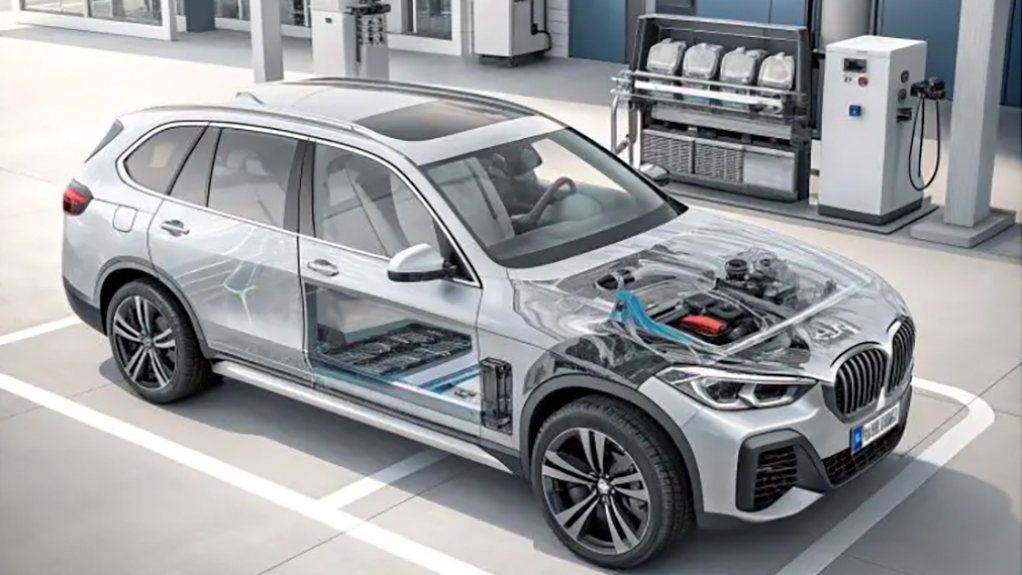
At the same time, Tvisi Motors CEO Swapnil Sunil’s LinkedIn note describes BMW’s latest iX5 hydrogen tank system as a strong signal that hydrogen technology has moved into an era of engineering maturity in which original-equipment manufacturers, infrastructure providers and policy are aligned.
BMW’s 700-bar high-pressure hydrogen tank enables a 750 km range and refuelling in under five minutes.
The tank stores 7 kg of hydrogen and allows fuel cell vehicles to be built on the same production lines as conventional drivetrains.
BMW has secured €273-million in German federal and Bavarian state funding to bring the iX5 to production for markets with existing hydrogen refuelling networks – Germany, California, and parts of France.
Meanwhile, in Poland, Piotr Rudyszyn of Studium Wodoru has driven a Toyota Mirai the 800 km from Zakopane to Hel on a single tank containing 5 kg of hydrogen.
The global hydrogen fuel cell electric vehicle market is projected to reach $15-billion by 2030, growing at a compound annual growth rate of 26.6% from 2023 to 2030.
Futubull reports that the trillion-yuan hydrogen market space being opened by China’s Fifteenth Five-Year Plan is auguring well for project operators, equipment suppliers and electrolyser suppliers.
Also in China, the first batch of 20 hydrogen-powered heavy-duty Dongfeng hydrogen trucks will be delivered by the end of May and will undergo trial operation on several key routes, including the Hanyi Expressway, the Beijing-Hong Kong-Macau Expressway, the Shanghai-Chengdu Expressway, and within Wuhan city. Subsequent batch deliveries will be completed in phases throughout the year, Fuel Cell Works reports.
In Inner Mongolia, China has launched a green hydrogen project with a capacity to produce 320 000 t of green ammonia a year using only solar and wind energy.
In France, Lhyfe CEO Matthieu Guesné has drawn attention to the EU and France continuing to import around 60% of their energy – mainly from currently geopolitically unstable regions – a structural dependency that affects industrial competitiveness, supply‑chain resilience and long‑term economic stability.
This vulnerability has become increasingly visible, with more than €300-billion leaving the EU annually, including €60-billion for France, to pay for imported offshore and polluting hydrocarbons.
Recent geopolitical tensions have disrupted up to 40% of global oil and gas flows, underscoring the true cost of fossil dependency.
Locally produced low-carbon energy is the only sustainable answer: producing energy domestically strengthens industrial resilience, shields domestic economies from the inevitable price shocks affecting fossil imports, and creates jobs.
Guesné emphasised locally produced green hydrogen is key to reducing dependence on fossil fuel imports: it is currently the only scalable solution capable of decarbonising the hard‑to‑electrify industries and heavy mobility.
As regulatory and industrial demand for green hydrogen intensifies, Lhyfe is positioning itself as a reference independent player, capable of durably supporting Europe's energy transition and industrial sovereignty.
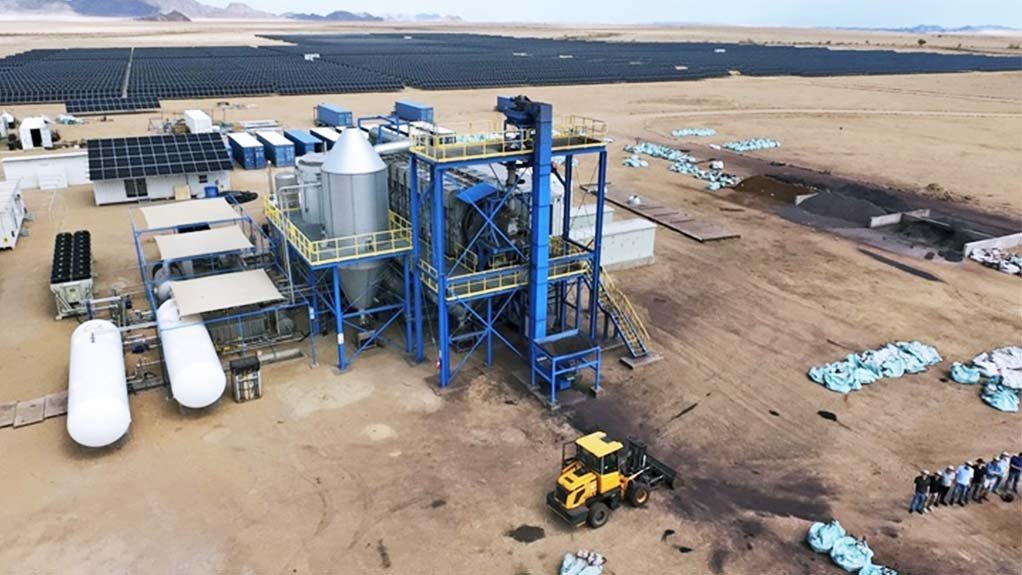
In Namibia, reduction of comparatively low-grade 56%-iron ore has been achieved on an industrial scale, led by Germany’s Federal Institute for Materials Research and Testing for Sustainable Steel from Australia and Germany (SuSteel). In an electrically powered hydrogen rotary kiln, 80 t of Australian iron-ore were converted climate neutrally into direct reduced iron. With this, SuSteel is paving the way for a sustainable value chain linking Australia, Namibia, and Germany – from iron production and refinement to green steel.
Renewables Now reports that the African Development Bank’s Sustainable Energy Fund for Africa has opened a call for proposals under a new green hydrogen programme offering up to $20-million in pre-investment support to advance private-sector projects across Africa and submission must be in by May 11.
In Italy, the use of green hydrogen and its derivatives has become part of national law.
In Holland, Gasunie subsidiary Hynetwork is building a hydrogen network. The pipeline in Rotterdam links the city’s port with industrial customers in the nearby area. The Delta Rhine Corridor is ultimately planned to connect Rotterdam to industry elsewhere in the Netherlands, as well as to Germany and hydrogen infrastructure across north-western Europe. Gasunie partnered with US hydrogen company Plug Power on filling the pipe.
In the UK, Katop Automation’s Devin Dong reports that ITM Power has secured £40-million from Great British Energy to expand its South Yorkshire facility by 1 GW, which increases domestic electrolyser production.
In South Korea, Hyundai E&C aims to develop tanks and loading systems for the storage of up to 50 000 m³ of hydrogen with $19.6-million from the South Korean government.
In Vienna, at the United Nations Industry Development Organisation conference attended by 70 countries, South Africa’s Industrial Development Corporation Just Energy Transition Investment Plan (JET-IP) programme director: green hydrogen Rebecca Maserumule last week outlined the support that South Africa is giving to first-movers in green hydrogen project development.
From a critical metals perspective, South Africa is host of the overwhelmingly largest global volumes of platinum group metals, which can serve as catalysts in electrolysers that separate water into hydrogen and oxygen and then play a second catalytic role by converting the hydrogen back into electricity that provides emission-free mobility for buses, trucks, trains, cars, ships and planes as well as stationary electricity for many industrial, commercial and microgrid applications.
Article Enquiry
Email Article
Save Article
Feedback
To advertise email advertising@creamermedia.co.za or click here
Research Reports
Projects
Latest Multimedia
Latest News
Showroom
North Ridge Pumps is an independent manufacturer of pumps. We have a proven track record for product support and customer service throughout the...
VISIT SHOWROOM
As a reticulator, Egoli Gas provides natural gas to homes and businesses via underground pipes.
VISIT SHOWROOM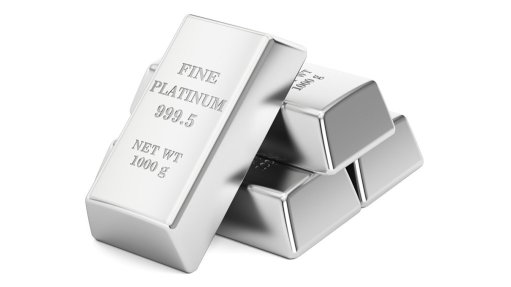
Announcements
What's On
Subscribe to improve your user experience...
Option 1 (equivalent of R125 a month):
Receive a weekly copy of Creamer Media's Engineering News & Mining Weekly magazine
(print copy for those in South Africa and e-magazine for those outside of South Africa)
Receive daily email newsletters
Access to full search results
Access archive of magazine back copies
Access to Projects in Progress
Access to ONE Research Report of your choice in PDF format
Option 2 (equivalent of R375 a month):
All benefits from Option 1
PLUS
Access to Creamer Media's Research Channel Africa for ALL Research Reports, in PDF format, on various industrial and mining sectors
including Electricity; Water; Energy Transition; Hydrogen; Roads, Rail and Ports; Coal; Gold; Platinum; Battery Metals; etc.
Already a subscriber?
Forgotten your password?
Receive weekly copy of Creamer Media's Engineering News & Mining Weekly magazine (print copy for those in South Africa and e-magazine for those outside of South Africa)
➕
Recieve daily email newsletters
➕
Access to full search results
➕
Access archive of magazine back copies
➕
Access to Projects in Progress
➕
Access to ONE Research Report of your choice in PDF format
RESEARCH CHANNEL AFRICA
R4500 (equivalent of R375 a month)
SUBSCRIBEAll benefits from Option 1
➕
Access to Creamer Media's Research Channel Africa for ALL Research Reports on various industrial and mining sectors, in PDF format, including on:
Electricity
➕
Water
➕
Energy Transition
➕
Hydrogen
➕
Roads, Rail and Ports
➕
Coal
➕
Gold
➕
Platinum
➕
Battery Metals
➕
etc.
Receive all benefits from Option 1 or Option 2 delivered to numerous people at your company
➕
Multiple User names and Passwords for simultaneous log-ins
➕
Intranet integration access to all in your organisation