GISTM gaining traction

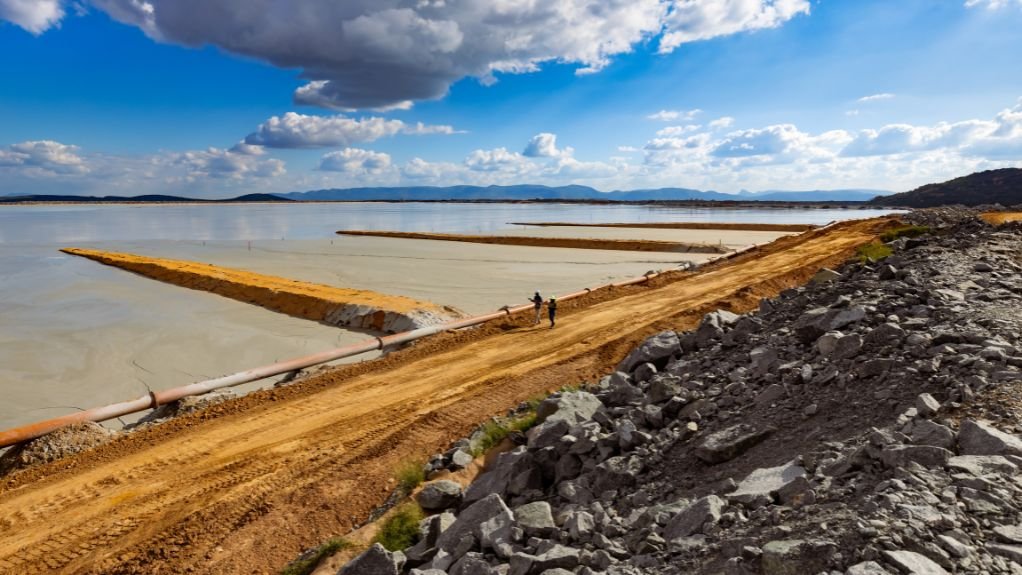
AUDITABLE REQUIREMENTS The Global Industry Standard on Tailings Management introduces clear, auditable requirements across the entire lifecycle of tailings facilities



An official tailings progress report from mining and metals advocacy group ICMM, published in November 2025, shows that 67% of 836 of its member’s tailings storage facilities (TSFs) were fully conformant with the Global Industry Standard on Tailings Management (GISTM), while 33% conformed partially.
ICMM members prioritised higher-risk facilities, with more than 80% of extreme and very high consequence TSFs achieving full conformance by August 2025. Lower-consequence TSFs recorded conformance levels ranging from 53% to 65%, in the same time period.
Globally, ICMM members committed in 2020 to implement the GISTM at all applicable TSFs within five years, says ICMM data and research director Dr Emma Gagen.
She notes that while this target has been ambitious and challenging, as not all requirements can be progressed in parallel, the commitment has driven unprecedented system-level change, “fundamentally reshaping tailings management”.
The GISTM was co-convened with the United Nations Environment Programme, and the Principles for Responsible Investment, comprising six topic areas, 15 principles and 77 auditable requirements aimed at preventing TSF failures.
It was developed in response to the catastrophic failure of the Brumadinho tailings dam, in Brazil, in January 2019, and introduces clear, auditable requirements – such as monitoring, risk assessment and emergency preparedness – across the life cycle of TSFs.
“Tailings management is a continuous improvement process, with ongoing review and auditing required to maintain conformance, as facility operations remain dynamic,” adds Gagen.
Implementation challenges include the need for sustained multidisciplinary effort and the sequencing of requirements, as meaningful engagement with affected communities and local governments is time-intensive, particularly when coordinating emergency preparedness and response plans.
She further notes a limited pool of specialised tailings expertise in the consulting market, which has been intensified by the scale and timeline of GISTM implementation. Older TSFs often lack historical data and might have outdated infrastructure, requiring additional monitoring, analysis and resources.
While the ICMM does not directly monitor TSFs, the GISTM requires operators to implement monitoring systems and maintain oversight through defined governance, auditing and assurance processes.
Closure Complications
TSFs are large and complex structures with long-term environmental implications; therefore, integrating tailings management decisions into TSF closure planning is essential, states Gagen.
Integrated closure planning offers the “greatest opportunity” to reduce risks such as acid rock drainage and pollution. The ICMM has partnered with the International Network on Acid Prevention to develop a practical tool for managing and preventing acid rock drainage and metal leaching.
Further, the GISTM requires TSF operators to engage meaningfully with project-affected people throughout a facility’s life cycle, placing community rights at its core, including during closure, adds Gagen.
The Global Tailings Management Institute, launched in 2025, will soon provide independent assurance of conformance with the GISTM. The institute will manage a framework for the independent auditing and certification of facilities against the GISTM, using qualified third-party assessors.
She says it will also promote awareness, support implementation and disclose audit outcomes.
Mining companies and tailings re-processors are moving beyond traditional tailings practices towards more integrated and site-specific approaches, with a key trend being the reduction or elimination of tailings using approaches described as “reduce, reuse and reimagine,” concludes Gagen.
Article Enquiry
Email Article
Save Article
Feedback
To advertise email advertising@creamermedia.co.za or click here


Projects


Latest News


Showroom

Developed to exceed the latest EN 15964 standards for police breathalysers proving that it will remain accurate and reliable for many years to come.
VISIT SHOWROOM
Design, Construction and Maintenance of Site Erected, Welded Bulk Storage Tanks for the Petrochemical, LNG, Ammonia and Sustainable fuel Sectors.
VISIT SHOWROOM



Announcements
What's On
Subscribe to improve your user experience...
Option 1 (equivalent of R125 a month):
Receive a weekly copy of Creamer Media's Engineering News & Mining Weekly magazine
(print copy for those in South Africa and e-magazine for those outside of South Africa)
Receive daily email newsletters
Access to full search results
Access archive of magazine back copies
Access to Projects in Progress
Access to ONE Research Report of your choice in PDF format
Option 2 (equivalent of R375 a month):
All benefits from Option 1
PLUS
Access to Creamer Media's Research Channel Africa for ALL Research Reports, in PDF format, on various industrial and mining sectors
including Electricity; Water; Energy Transition; Hydrogen; Roads, Rail and Ports; Coal; Gold; Platinum; Battery Metals; etc.
Already a subscriber?
Forgotten your password?
Receive weekly copy of Creamer Media's Engineering News & Mining Weekly magazine (print copy for those in South Africa and e-magazine for those outside of South Africa)
➕
Recieve daily email newsletters
➕
Access to full search results
➕
Access archive of magazine back copies
➕
Access to Projects in Progress
➕
Access to ONE Research Report of your choice in PDF format
RESEARCH CHANNEL AFRICA
R4500 (equivalent of R375 a month)
SUBSCRIBEAll benefits from Option 1
➕
Access to Creamer Media's Research Channel Africa for ALL Research Reports on various industrial and mining sectors, in PDF format, including on:
Electricity
➕
Water
➕
Energy Transition
➕
Hydrogen
➕
Roads, Rail and Ports
➕
Coal
➕
Gold
➕
Platinum
➕
Battery Metals
➕
etc.
Receive all benefits from Option 1 or Option 2 delivered to numerous people at your company
➕
Multiple User names and Passwords for simultaneous log-ins
➕
Intranet integration access to all in your organisation