Generators continue to offer value

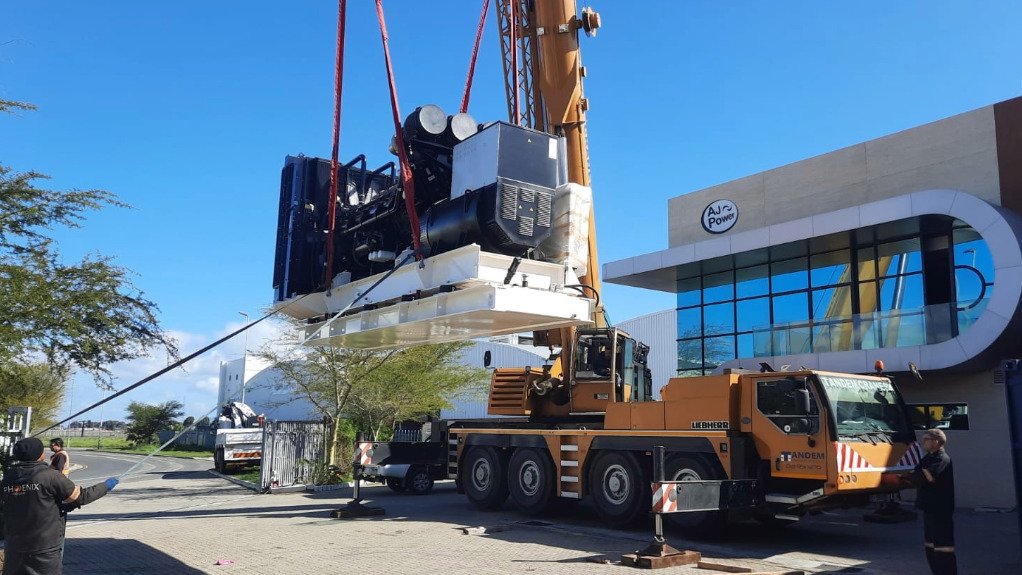
KNOWLEDGE IS POWER Customers are aware of their exact power requirements, ensuring that take proactive measure and use generators more efficiently


Amid South Africa’s evolving energy landscape, generators and standby power solutions remain highly relevant, provided that they are deployed intelligently through proactive fuel and load management and, increasingly, within hybrid solutions, says UK based diesel and hybrid power solutions manufacturer AJ Power business development director Andrew Pigott.
While a significant drawback of using generators is the high costs associated with diesel, the key driver for generator use is mitigating downtime rather than avoiding associated costs.
He adds that, despite State-owned power utility Eskom’s tariff increases typically outpacing inflation, grid power is still cheaper on a kilowatt-hour basis than diesel generation for small and medium-sized enterprises, as well as most residential customers.
However, in sectors such as cold-chain, mining, healthcare and telecommunications the cost of an unplanned outage, through production stoppages, stock loss, service level agreement breaches and safety risks, often outweighs the cost of running a generator.
“It becomes rational to run a generator and generate your own electrical supply, so you remain in control,” he says, adding that Eskom burns significant diesel to bolster grid supply.
Meanwhile, for heavy users that are subject to time-of-use tariffs, generators also serve as a peak-shaving tool, helping to avoid expensive peak-period charges. Pigott says end-users are “economically savvy”, electing to run generators when justified and minimising diesel consumption where possible.
This is a result of South Africa’s cycle of partial energy recovery and renewed outages, such as loadshedding and more recently load reduction, which has made customers more aware of their exact power requirements, as off-periods have a direct impact on the bottom line of their business.
Leveraging this knowledge, in conjunction with electrical engineering consultants, end-users can size their required installations significantly better and their generators more efficiently, ensuring the best fuel economy and extending generator life, Pigott explains.
This awareness also enables end-users to be proactive, such as buying diesel in bulk, in advance, to “lock in the price”; managing the load to ensure that only the essential, revenue-generating loads are running; and improving diesel quality management to ensure that fuel meets the required specifications.
He adds that there has also been a move towards synchronising generators, which provides redundancy and better running costs when loads are low, as machines that are not needed at that time are switched off.
Hybrid Solutions
As market liberalisation advances through open grid access and new mechanisms for independent power producers and large energy consumers, Pigott asserts that standby generators will not disappear, but rather evolve.
With battery and solar PV panel prices improving, customers are already increasingly considering hybrid solutions that combine solar, battery and generators. During daytime, solar power supports the load requirement, with any excess stored in batteries for low-load hours. Generators are then reserved for high-load processes, night-time peaks and extended outages.
“We’ve completed several installations with solar and batteries. Alongside other benefits of this model, it can reduce the generator size, which, naturally, reduces diesel [consumption],” says Pigott.
Through hybrid models, generators will increasingly form part of a broader energy portfolio alongside corporate power- purchase agreements, wheeled renewables and storage solutions, shifting from everyday protection to true standby assets.
“This is important, as we are seeing an increasing number of grid faults in some areas, sometimes for a long period, which would not be supportable [using] . . . only renewable sources,” Pigott says.
Customers are also integrating remote monitoring systems into these solutions, which enables them to track system health through a phone or computer. These systems can balance multiple energy sources, send service reminders and flag faults, many of which can be diagnosed and resolved remotely.
Further, Pigott points out that, in mature markets, such as those of the UK, EU and US, diesel generators provide support in terms of grid stabilisation services, with larger generator units becoming paid assets, instead of a “sunk cost”, as the operators have allowed businesses to bid on alternative or active network management contracts to become grid support assets.
“Large users are using this liberalisation to ensure energy security with the benefit of generating some returns if they have excess power to export at different times of the day.”
For South Africa, Pigott anticipates diesel standby demand will stabilise over the next five years, driven by market liberalisation, growth in private generation and behind-the-meter solar PV expansion.
Noting that underlying risk persists, with load reduction events and grid faults continuing to cause unplanned outages, he says South Africa will require substantial power to achieve meaningful economic growth. Therefore, critical facilities will continue to require dedicated backup generation, with resilience procurement essential in some sectors.
Pigott asserts that AJ Power is well- positioned for this scenario through its research and development on battery energy storage systems, its emissions compliant range and its engineering competency in complex control systems.
“We are constantly improving our product and keeping an eye on market developments,” he concludes.
Article Enquiry
Email Article
Save Article
Feedback
To advertise email advertising@creamermedia.co.za or click here

Projects

Latest News

Showroom
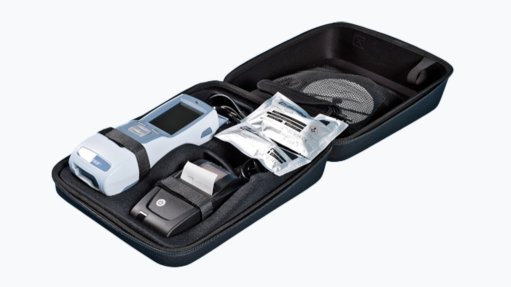
Developed to exceed the latest EN 15964 standards for police breathalysers proving that it will remain accurate and reliable for many years to come.
VISIT SHOWROOM
Design, Construction and Maintenance of Site Erected, Welded Bulk Storage Tanks for the Petrochemical, LNG, Ammonia and Sustainable fuel Sectors.
VISIT SHOWROOM

Announcements
What's On
Subscribe to improve your user experience...
Option 1 (equivalent of R125 a month):
Receive a weekly copy of Creamer Media's Engineering News & Mining Weekly magazine
(print copy for those in South Africa and e-magazine for those outside of South Africa)
Receive daily email newsletters
Access to full search results
Access archive of magazine back copies
Access to Projects in Progress
Access to ONE Research Report of your choice in PDF format
Option 2 (equivalent of R375 a month):
All benefits from Option 1
PLUS
Access to Creamer Media's Research Channel Africa for ALL Research Reports, in PDF format, on various industrial and mining sectors
including Electricity; Water; Energy Transition; Hydrogen; Roads, Rail and Ports; Coal; Gold; Platinum; Battery Metals; etc.
Already a subscriber?
Forgotten your password?
Receive weekly copy of Creamer Media's Engineering News & Mining Weekly magazine (print copy for those in South Africa and e-magazine for those outside of South Africa)
➕
Recieve daily email newsletters
➕
Access to full search results
➕
Access archive of magazine back copies
➕
Access to Projects in Progress
➕
Access to ONE Research Report of your choice in PDF format
RESEARCH CHANNEL AFRICA
R4500 (equivalent of R375 a month)
SUBSCRIBEAll benefits from Option 1
➕
Access to Creamer Media's Research Channel Africa for ALL Research Reports on various industrial and mining sectors, in PDF format, including on:
Electricity
➕
Water
➕
Energy Transition
➕
Hydrogen
➕
Roads, Rail and Ports
➕
Coal
➕
Gold
➕
Platinum
➕
Battery Metals
➕
etc.
Receive all benefits from Option 1 or Option 2 delivered to numerous people at your company
➕
Multiple User names and Passwords for simultaneous log-ins
➕
Intranet integration access to all in your organisation