Establishing Africa’s regional electricity corridors – a story of great potential and promise

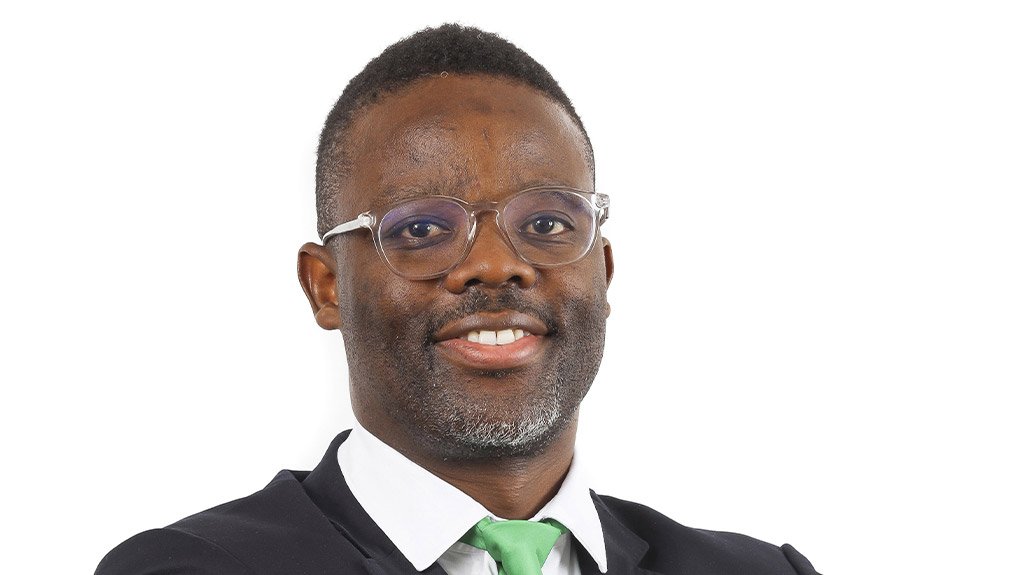



This article has been supplied.
By: Taru Madangombe - Vice President for Power and Grid Segment, MEA at Schneider Electric
The EU’s electricity network spans over 11 million kilometres, making it one of the most extensive and resilient in the world. Today, these corridors enable energy to flow efficiently across member states, lowering costs whilst managing rising demand.
Importantly, it also allows renewables like wind power in the North Sea or solar in Southern Europe to be distributed widely, smoothing variability and strengthening the overall system.
For Africa, where unfortunately many power systems remain perpetually fragmented and underfunded, Europe’s regional power distribution corridors offer a compelling blueprint.
National grids and regional highways
At its core, grid interconnection is about strength through collaboration. One way to understand it is to think of electricity infrastructure like transport infrastructure. National distribution networks are the local and secondary roads that serve towns and cities. Regional transmission corridors, by contrast, are the highways, high-capacity routes that connect countries, enable trade, and keep economies moving.
Europe has invested heavily in these “electricity highways”: high-voltage transmission corridors that link national grids into a single interconnected system. This allows power to flow seamlessly across borders, strengthening each country’s grid by giving it access to external supply when needed.
And whilst not perfect, nothing ever is, it does offer exceptional resilience and flexibility.
Corridors in Africa
The good news Africa has already begun this journey. In Southern Africa, the Southern African Power Pool (SAPP) enables electricity trading between countries such as South Africa, Botswana, Zimbabwe and Mozambique.
Established in 1995, under the Southern African Development Community (SADC), it brings together the national electricity companies of twelve Southern African countries to form a common power grid and electricity market
In practice, SAPP has enabled countries like South Africa, Zambia, Lesotho and Mozambique to export electricity to neighbours, while smaller economies benefit from access to more stable and affordable supply. It is a cornerstone of regional energy cooperation, though challenges remain around infrastructure investment and governance.
Harnessing Africa’s great energy resources
Strengthening regional electricity corridors would allow Africa to better leverage its diverse and unevenly distributed energy resources.
East Africa, for instance, is rich in hydropower and geothermal energy, particularly in countries such as Kenya and Ethiopia. These renewable resources could support industrial growth and energy security far beyond their borders if strong transmission corridors were in place.
During periods of power shortages in Southern Africa, clean energy from the East could help stabilise supply, reduce reliance on emergency generation, and lower emissions.
Furthermore, from an economic perspective, larger, integrated electricity markets can also lower costs. Shared infrastructure reduces duplication, enables economies of scale, and makes renewable energy projects more bankable. This offers a practical, interim solution while long-term investment is still developing and pending.
What is holding Africa back?
The challenge is not technology. High-voltage transmission solutions, grid management systems, and interconnection expertise already exist. Infrastructure suppliers, developers, and utilities have the technical capability to deliver these projects.
The primary barrier is funding, and, closely linked to that, coordination. Building transmission lines across thousands of kilometres and multiple jurisdictions require significant capital investment and strong political alignment.
Regional bodies such as the African Union and SADC provide a framework, but progress depends on collective commitment.
Large-scale visions such as the Great Inga hydropower in the Democratic Republic of Congo (DRC) illustrate both the opportunity and the challenge
The Inga Project it has been on the drawing board for decades, with multiple phases proposed, re-scoped, and delayed. The first two dams (Inga I and II) were completed in the 1970s and 1980s, but they only tapped a small fraction of the Congo River’s immense hydropower potential.
Since then, the larger vision, Inga III and ultimately the Grand Inga scheme, has been repeatedly announced, negotiated, and postponed due to financing hurdles, governance challenges, and shifting political priorities.
The above is a clear example of the continent’s continued obstacles however also clearly illustrates of Africa and how it will gain tremendously from regional electricity corridors.
Article Enquiry
Email Article
Save Article
Feedback
To advertise email advertising@creamermedia.co.za or click here
Research Reports

Projects
Latest Multimedia

Latest News
Showroom

Columbus Stainless, based in Middelburg, Mpumalanga, is Africa’s only producer of stainless steel flat products. In addition, Columbus is the only...
VISIT SHOWROOM
The SAIMM started as a learned society in 1894 after the invention of the cyanide process that saved the South African gold mining industry of the...
VISIT SHOWROOM
Press Office
Announcements
What's On
Subscribe to improve your user experience...
Option 1 (equivalent of R125 a month):
Receive a weekly copy of Creamer Media's Engineering News & Mining Weekly magazine
(print copy for those in South Africa and e-magazine for those outside of South Africa)
Receive daily email newsletters
Access to full search results
Access archive of magazine back copies
Access to Projects in Progress
Access to ONE Research Report of your choice in PDF format
Option 2 (equivalent of R375 a month):
All benefits from Option 1
PLUS
Access to Creamer Media's Research Channel Africa for ALL Research Reports, in PDF format, on various industrial and mining sectors
including Electricity; Water; Energy Transition; Hydrogen; Roads, Rail and Ports; Coal; Gold; Platinum; Battery Metals; etc.
Already a subscriber?
Forgotten your password?
Receive weekly copy of Creamer Media's Engineering News & Mining Weekly magazine (print copy for those in South Africa and e-magazine for those outside of South Africa)
➕
Recieve daily email newsletters
➕
Access to full search results
➕
Access archive of magazine back copies
➕
Access to Projects in Progress
➕
Access to ONE Research Report of your choice in PDF format
RESEARCH CHANNEL AFRICA
R4500 (equivalent of R375 a month)
SUBSCRIBEAll benefits from Option 1
➕
Access to Creamer Media's Research Channel Africa for ALL Research Reports on various industrial and mining sectors, in PDF format, including on:
Electricity
➕
Water
➕
Energy Transition
➕
Hydrogen
➕
Roads, Rail and Ports
➕
Coal
➕
Gold
➕
Platinum
➕
Battery Metals
➕
etc.
Receive all benefits from Option 1 or Option 2 delivered to numerous people at your company
➕
Multiple User names and Passwords for simultaneous log-ins
➕
Intranet integration access to all in your organisation