Drone developments boast uptake

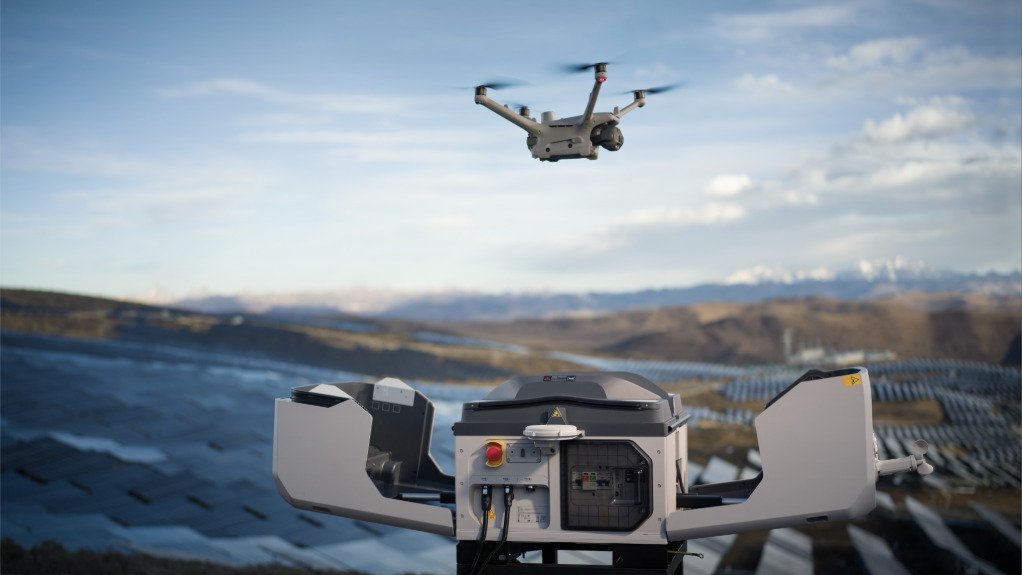
CORE INFRASTRUCTURE Autonomous drones have simplified drone integration in remote locations, providing in-depth data and other advantages


Drones are transitioning from specialised outsourced tools into core operational infrastructure, driven by lower drone costs, technology advances and the emergence of autonomous, dock-based drone networks that no longer require a physical onsite operator, says drone distributor GoUAV MD Philip Smerkovitz.
When drones were initially introduced to the market, end-users had to rely on a limited number of licensed service providers, who often lacked the skills required for specialised applications. This, alongside the high costs associated with outsourced operators and the complexity of managing drones in house, led to the slow uptake, he explains.
However, the decline in drone prices, alongside improved technology and regulatory updates, have enabled companies to obtain operating licences and manage drone fleets from centralised control rooms across broader applications.
Initially, use cases were limited to perimeter security, and pipeline and rail monitoring in the security industry, while the mining industry introduced drones for mapping and surveying applications, in addition to security.
Expanded applications have allowed for thermal drone to be used for night perimeter security, to monitor heat distribution on conveyor belts, to survey electrical infrastructure, perform mapping exercises or conduct data-gathering missions across a site during the day.
More recently, the integration of AI has enabled drones to conduct engineering inspections, where drones leverage AI to scan equipment, infrastructure and industrial assets, identifying anomalies and faults faster than manual review.
Smerkovitz explains that AI is also being integrated into drone data analytics by comparing the imagery of stockpiles, erosion, vegetation changes and asset condition, among other structures, over time. AI can also prioritise alerts and generate exceptions-based reporting as opposed to raw data dumps.
This capability is being refined rapidly as augmented reality technology improves, enabling systems to flag the presence of humans, vehicles, heat anomalies on power lines and structural changes without requiring a separate team of analysts to interpret the data. As a result, workflows have become more streamlined.
“Instead of humans reviewing hours of footage, AI surfaces the small percentage that needs attention. It shifts drones from data collection to decision support. AI does not replace the operator, rather it replaces delayed decision-making,” he says.
Additionally, AI-enabled drones can be highly effective for predictive maintenance and safety inspections.
However, AI systems must be configured according to local conditions, such as lighting, dust, terrain and asset types. Smerkovitz also cautions that AI outputs should be verified against known baselines and "ground truths", alongside personnel confirming actions when AI flags exceptions.
Evolving Technology
While AI systems significantly streamline data collection and interpretation, the reliability of AI systems depends on the data quality such as consistent flight paths, stable sensor calibration and sufficient ground-sampling distance.
Sensor quality vastly impacts on the drone’s ability to collect data and the AI system’s ability to interpret the resulting data, with high-quality thermal and visual sensors and mapping payloads producing consistent, usable data without the need for manual tuning, Smerkovitz adds.
Sensor capabilities, such as thermal cameras, multispectral cameras and red-green-blue cameras, as well as and light detection and ranging cameras, are improving in resolution and sophistication.
Meanwhile, sensor integration with enterprise platforms, including maintenance systems, geographic information system tools, security infrastructure and asset management software, are becoming stronger and more seamless, he adds.
These capabilities are enhanced by autonomous dock-based drones and cloud communication, which facilitates a centralised approach to drone integration.
During a typical workflow, missions, such as routine patrols or inspections, can be scheduled or triggered. The drone launches from the dock and completes predefined routes while capturing data, which, in turn, is streamed or uploaded for processing.
Upon completing the route, the drone returns to the dock, lands, recharges and awaits the next task, with the dock serving as a base station that supports automated, safe operations.
The docks are placed on site, housing the drone without the need for an on-site operator. Remote locations can, therefore, be continuously monitored from centralised control rooms far from the location, reducing site visits and travel time to remote areas.
Current docking technology supports 30-minute charge-and-flight cycles. However, organisations can offset this by deploying networks of docking stations with drones rotating between charging and flying.
Further, battery technology and power management are improving steadily, allowing longer flight times, more frequent missions and better reliability.
Amid these improvements and other developments, Smerkovitz avers that organisations that treat drone ecosystems as infrastructure rather than equipment deployed for limited projects will realise the greater long-term value.
“A 24/7 drone operation can cover everything – from data gathering, inspections, mapping, surveying and security, both day and night. The devices have become so easily deployable that it makes sense to bring this capability in house,” he says.
Meanwhile, the GoUAV Drone Enablement Programme assists organisations in obtaining private licensing and operating their own drones.
The programme entails drone procurement, servicing, maintenance, support training, operator training, pilot training and compliance, covering all requirements set by industry authority South African Civil Aviation Authority.
The programme takes between six to eight weeks, and participants are trained in operating various drone applications. Upon completion of the programme, GoUAV continues to support participants in terms of consultation, the supply of drones and logistics.
Article Enquiry
Email Article
Save Article
Feedback
To advertise email advertising@creamermedia.co.za or click here


Projects



Latest News

Showroom
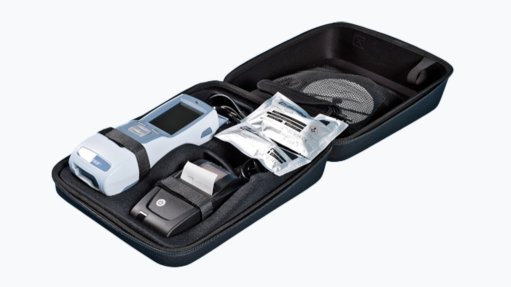
Developed to exceed the latest EN 15964 standards for police breathalysers proving that it will remain accurate and reliable for many years to come.
VISIT SHOWROOM
Design, Construction and Maintenance of Site Erected, Welded Bulk Storage Tanks for the Petrochemical, LNG, Ammonia and Sustainable fuel Sectors.
VISIT SHOWROOM


Announcements
What's On
Subscribe to improve your user experience...
Option 1 (equivalent of R125 a month):
Receive a weekly copy of Creamer Media's Engineering News & Mining Weekly magazine
(print copy for those in South Africa and e-magazine for those outside of South Africa)
Receive daily email newsletters
Access to full search results
Access archive of magazine back copies
Access to Projects in Progress
Access to ONE Research Report of your choice in PDF format
Option 2 (equivalent of R375 a month):
All benefits from Option 1
PLUS
Access to Creamer Media's Research Channel Africa for ALL Research Reports, in PDF format, on various industrial and mining sectors
including Electricity; Water; Energy Transition; Hydrogen; Roads, Rail and Ports; Coal; Gold; Platinum; Battery Metals; etc.
Already a subscriber?
Forgotten your password?
Receive weekly copy of Creamer Media's Engineering News & Mining Weekly magazine (print copy for those in South Africa and e-magazine for those outside of South Africa)
➕
Recieve daily email newsletters
➕
Access to full search results
➕
Access archive of magazine back copies
➕
Access to Projects in Progress
➕
Access to ONE Research Report of your choice in PDF format
RESEARCH CHANNEL AFRICA
R4500 (equivalent of R375 a month)
SUBSCRIBEAll benefits from Option 1
➕
Access to Creamer Media's Research Channel Africa for ALL Research Reports on various industrial and mining sectors, in PDF format, including on:
Electricity
➕
Water
➕
Energy Transition
➕
Hydrogen
➕
Roads, Rail and Ports
➕
Coal
➕
Gold
➕
Platinum
➕
Battery Metals
➕
etc.
Receive all benefits from Option 1 or Option 2 delivered to numerous people at your company
➕
Multiple User names and Passwords for simultaneous log-ins
➕
Intranet integration access to all in your organisation