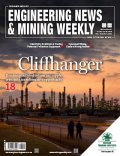
Big lingering questions





During the most recent energy crisis – triggered by attacks by the US and Israel on Iran that resulted in the near closure of the Strait of Hormuz energy corridor ahead of a tenuous ceasefire – one could argue South Africa took some decisions aimed at containing the threats, and creating space to consider the next steps.
Presumably under the direction of the task team created by President Cyril Ramaphosa, government moved to ease the immediate financial pain by cutting fuel levies, in line with the actions of several of its peers.
Simultaneous efforts were made to confirm and/or to diversify contractual arrangements to shore up the ongoing flow of physical product; a response that underlined the reality that the country currently has limited domestic refining capacity and is likely to face increasing competition for petrol and especially diesel.
Those responsible for physical product flows will naturally need to remain on high alert as pinch points remain. But it was made clear from the outset that the financial relief will not be sustained for the long term.
Instead, the reduction in the fuel levy was mostly about buying time and creating the immediate stability needed to make the next set of decisions; ones that will increasingly be geared towards limiting the medium-term fallout, while building long-term structural resilience.
None of the options under consideration for the longer term are risk- or cost-free.
What has been startling, however, is how prepared some energy policy commentators are to propose back-to-the-future solutions that don’t only carry the potential for high regret, but also brazenly ignore energy technology and market developments, the affordability risks and the fiscal costs.
Building a new refinery fleet or restarting moribund refineries emerged as a particularly popular suggestion, ignoring the lack of domestic crude production, which means that South Africa would remain highly import exposed regardless of the nature of the product being imported.
True, crude could be imported from countries in Africa where shipping has not been disrupted. But that cannot be the only consideration.
What about the fiscal implications and the other pressing social and economic priorities that would need to be sacrificed in favour of a big refinery bet?
Does this play to South Africa’s resource advantages in coal, solar and wind, or does it further entrench import dependence at a time when other countries with weaker resource advantages are turning to renewables and storage to bolster energy sovereignty?
What scale of refinery would be needed for cost competitiveness and, crucially, does that match not only immediate demand, but future demand that could wane as various energy services are electrified?
If Sapref is restarted, would it be cost competitive and would it produce the fuels required by South Africa’s modern vehicle fleet?
Does it position South Africa as an electro-State leader in Africa or entrench long-term petrodollar dependence?
Knee-jerk assertions must now make way for evidence-based answers to these big lingering questions, or yet another crisis may go wasted.
Article Enquiry
Email Article
Save Article
Feedback
To advertise email advertising@creamermedia.co.za or click here
Research Reports
Projects
Latest Multimedia

Latest News
Showroom
Your global lifecycle technology & service partner for materials & minerals processing equipment for coal, iron ore, copper, manganese & other...
VISIT SHOWROOM
Rentech provides renewable energy products and services to the local and selected African markets. Supplying inverters, lithium and lead-acid...
VISIT SHOWROOM
Announcements
What's On
Subscribe to improve your user experience...
Option 1 (equivalent of R125 a month):
Receive a weekly copy of Creamer Media's Engineering News & Mining Weekly magazine
(print copy for those in South Africa and e-magazine for those outside of South Africa)
Receive daily email newsletters
Access to full search results
Access archive of magazine back copies
Access to Projects in Progress
Access to ONE Research Report of your choice in PDF format
Option 2 (equivalent of R375 a month):
All benefits from Option 1
PLUS
Access to Creamer Media's Research Channel Africa for ALL Research Reports, in PDF format, on various industrial and mining sectors
including Electricity; Water; Energy Transition; Hydrogen; Roads, Rail and Ports; Coal; Gold; Platinum; Battery Metals; etc.
Already a subscriber?
Forgotten your password?
Receive weekly copy of Creamer Media's Engineering News & Mining Weekly magazine (print copy for those in South Africa and e-magazine for those outside of South Africa)
➕
Recieve daily email newsletters
➕
Access to full search results
➕
Access archive of magazine back copies
➕
Access to Projects in Progress
➕
Access to ONE Research Report of your choice in PDF format
RESEARCH CHANNEL AFRICA
R4500 (equivalent of R375 a month)
SUBSCRIBEAll benefits from Option 1
➕
Access to Creamer Media's Research Channel Africa for ALL Research Reports on various industrial and mining sectors, in PDF format, including on:
Electricity
➕
Water
➕
Energy Transition
➕
Hydrogen
➕
Roads, Rail and Ports
➕
Coal
➕
Gold
➕
Platinum
➕
Battery Metals
➕
etc.
Receive all benefits from Option 1 or Option 2 delivered to numerous people at your company
➕
Multiple User names and Passwords for simultaneous log-ins
➕
Intranet integration access to all in your organisation