Basic Fuel Price formula in focus amid dramatic shift in South Africa’s supply sources

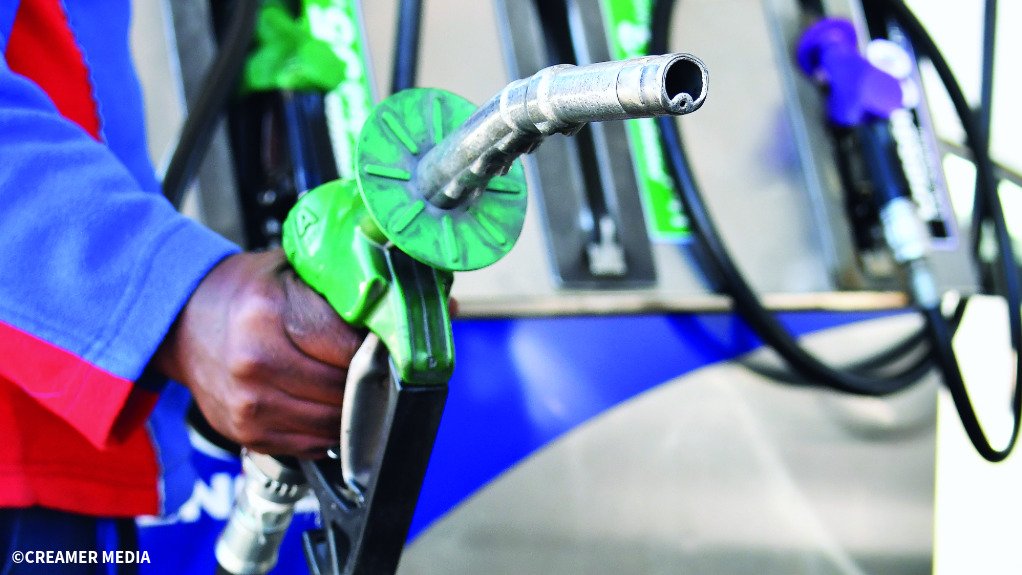



The Department of Mineral and Petroleum Resources (DMPR), which is now preparing for a prolonged period of fuel supply and pricing pressure as a result of the damage to energy infrastructure during the war in the Middle East, remains confident of ongoing security of supply.
However, the department is deeply concerned about the outlook for fuel prices, especially in relation to diesel, and is also urgently reviewing the composition of its Basic Fuel Price (BFP) formula to align it to the new sources of supply that have been secured since the start of the crisis and to address the issues that have given rise to the imposition of diesel surcharges.
Deputy director-general for mineral and petroleum regulation Tseliso Maqubela tells Engineering News that government does not anticipate the disruptions to supply being resolved in the near-term.
This analysis is in line with a joint assessment by the International Monetary Fund (IMF), the World Bank and the International Energy Agency, indicating that it will take months for supply from the Gulf region to normalise, even if shipping in the Strait of Hormuz is opened, owing to the damage that has been done to energy infrastructure.
During a briefing this week, IMF chief economist Pierre-Olivier Gourinchas said even if the conflict ended immediately, the oil shortfall for the year would be comparable to the shock from the 1970s in terms of how much oil will be withdrawn from the market on an annual average basis.
South Africa is responding to the likelihood of a prolonged period of disruption by moving to secure new sources of supply.
This is being aided by the country’s diversified fuel industry ecosystem that includes international energy companies, traders, domestic refiners and State-owned entities, and which Maqubela says has proved remarkably resilient in its ability to source fuel as the crisis has unfolded.
Analysis by Cresco advisory partner Dominic Goncalves shows that, ahead of the crisis, South Africa was sourcing about 60% of its fuel from countries in the Gulf region including Oman, the United Arab Emirates, and Bahrain, as well as India, which is indirectly exposed to shipping disruptions in the Strait of Hormuz.
ATLANTIC BASIN SUPPLY
However, Maqubela reports that there has been a “dramatic shift” in the sources of supply towards the Atlantic Basin, with South Africa having secured supply not only from traditional European suppliers, which mainly supply the country with petrol, but also new sources, such as Brazil, Mexico and the US.
He reports that South Africa is currently not receiving any shipments from the Gulf, and that besides these new supply sources the country’s domestic refineries, notably Natref and Sasol’s coal-to-liquids plants, are also contributing positively.
The domestic production of jet fuel, he reports, has also positioned South Africa strongly relative to the situation in several other countries; to the extent where steps may be taken to prevent international airliners taking on more fuel at OR Tambo than was the case ahead of the attack on Iran by the US and Israel in February.
“So, we are comfortable on the security-of-supply side,” Maqubela tells Engineering News, attributing South Africa’s progress in securing new sources largely to the diverse nature of the companies involved in the domestic industry when compared with those that, for instance, rely mainly on national oil companies.
However, he stresses that this is not being taken for granted, with meetings taking place every weekday between government and the various role-players, including all of the participants in the fuel industry, several Transnet units, the Airports Company South Africa and the National Energy Regulator of South Africa.
In addition, a Cabinet task team has been established to assess short-term responses to the crisis, with government having already implemented a R3/l cut to the general fuel levy in April to help reduce what would have been even steeper hikes during the month. Further announcements could be made ahead of the May adjustments, with the daily data compiled by the Central Energy Fund pointing to ongoing under-recoveries in April.
Longer-term strategies are also under consideration to improve security of supply, including reviving some of the closed refineries, which could source crude from the rest of Africa, and increasing the storage facilities for final product.
Maqubela says that government acknowledges that the country’s current storage capacity for final product is insufficient and it is assessing what should be held as commercial stocks by the fuel industry, what government should hold in addition, and how those costs should be recouped.
REVISIONS TO THE BFP
Where he is more immediately concerned, however, is in relation to the price outlook, especially for diesel, as well as in finding ways to address the uncertainty that has arisen as a result of the diesel surcharges that have been introduced by some fuel wholesalers in response to an under-recovery of costs as prices surged.
Maqubela reports that government is not in favour of moving away from monthly price adjustments and introducing more regular adjustments, arguing that “the department is unconvinced that the consumer will gain anything” from such an intervention.
Instead, the DMPR is urgently reviewing the BFP for diesel, as the reference markets that have been used hitherto have a heavy weighting towards supply arising from the Gulf, and no longer reflect the current main sources of supply, or the associated freight, storage, finance and insurance costs.
“We believe that will bring about stability,” he tells Engineering News, arguing that the change will mean that the BFP will more accurately reflect the costs of importing diesel from the new source markets and will address the pricing mismatch that is motivating the introduction of surcharges.
No changes are being considered for the petrol BFP.
Maqubela did not provide a firm timeframe for introducing the new formula, saying only that the department is giving it priority attention.
He stresses, too, that he is unable to comment on what measures the Cabinet task team is considering or whether additional announcements will be made ahead of the May price adjustments.
Article Enquiry
Email Article
Save Article
Feedback
To advertise email advertising@creamermedia.co.za or click here
Research Reports

Projects


Latest Multimedia

Latest News
Showroom

For over 60 years, VEGA has provided industry-leading products for the measurement of level, density, weight and pressure. As the inventor of the...
VISIT SHOWROOM


Announcements
What's On
Subscribe to improve your user experience...
Option 1 (equivalent of R125 a month):
Receive a weekly copy of Creamer Media's Engineering News & Mining Weekly magazine
(print copy for those in South Africa and e-magazine for those outside of South Africa)
Receive daily email newsletters
Access to full search results
Access archive of magazine back copies
Access to Projects in Progress
Access to ONE Research Report of your choice in PDF format
Option 2 (equivalent of R375 a month):
All benefits from Option 1
PLUS
Access to Creamer Media's Research Channel Africa for ALL Research Reports, in PDF format, on various industrial and mining sectors
including Electricity; Water; Energy Transition; Hydrogen; Roads, Rail and Ports; Coal; Gold; Platinum; Battery Metals; etc.
Already a subscriber?
Forgotten your password?
Receive weekly copy of Creamer Media's Engineering News & Mining Weekly magazine (print copy for those in South Africa and e-magazine for those outside of South Africa)
➕
Recieve daily email newsletters
➕
Access to full search results
➕
Access archive of magazine back copies
➕
Access to Projects in Progress
➕
Access to ONE Research Report of your choice in PDF format
RESEARCH CHANNEL AFRICA
R4500 (equivalent of R375 a month)
SUBSCRIBEAll benefits from Option 1
➕
Access to Creamer Media's Research Channel Africa for ALL Research Reports on various industrial and mining sectors, in PDF format, including on:
Electricity
➕
Water
➕
Energy Transition
➕
Hydrogen
➕
Roads, Rail and Ports
➕
Coal
➕
Gold
➕
Platinum
➕
Battery Metals
➕
etc.
Receive all benefits from Option 1 or Option 2 delivered to numerous people at your company
➕
Multiple User names and Passwords for simultaneous log-ins
➕
Intranet integration access to all in your organisation