Aluminium market headed for 'unprecedented crisis' warns WoodMac

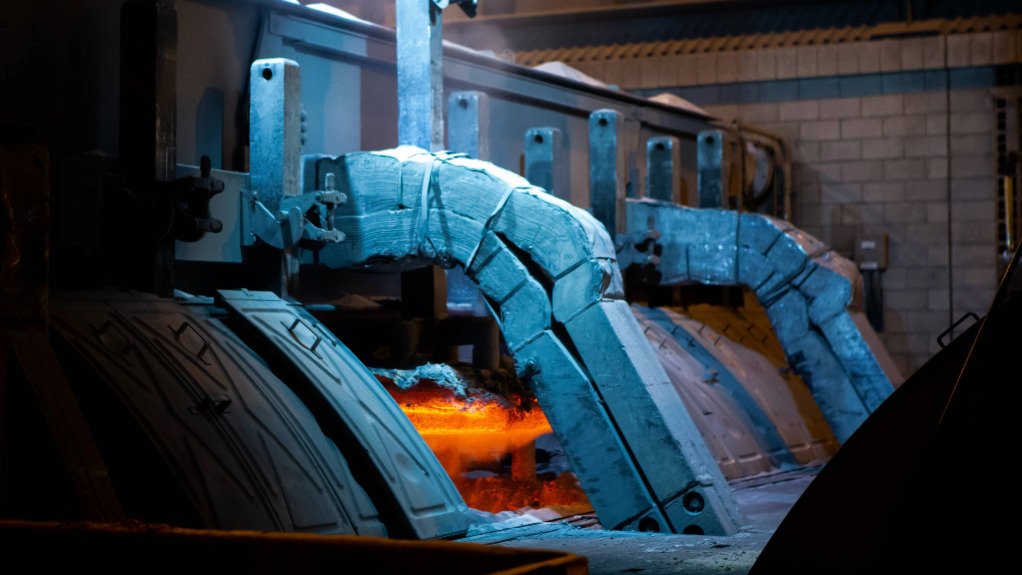


The Iran war is triggering an unprecedented crisis in the global aluminium market with potentially devastating knock-on effects across sectors as diverse as construction, packaging, transport and green energy, says consultancy Wood Mackenzie.
Even if the war were to end tomorrow, it could take up to a year for Emirates Global Aluminium to recover from the damage inflicted by a missile strike on its Al Taweelah smelter in March.
Aluminium Bahrain, the largest single-site production plant outside of China, has also been hit, although the extent of the damage is currently unknown. Alba had already reduced output prior to the attack, as had Qatar Aluminium, owing to a shortage of power.
With shipping through the Strait of Hormuz severely constrained, the loss of production could rise further as smelters run through their stocks of raw materials.
The global market is looking at a supply deficit of up to four-million metric tons this year, Wood Mackenzie estimates.
Western buyers will bear the brunt of that massive supply hit and policymakers will face some hard choices in the weeks ahead if they want to cushion the impact.
THIN INVENTORY COVER
In times gone by the market could have turned to the London Metal Exchange (LME) for extra metal. Registered inventory exceeded five-million tons in the first part of the last decade.
LME stocks have since shrunk to under 400 000 t with another 100 000 t sitting in the off-warrant category.
CME warehouses have also been raided. Total deliverable stocks have slumped by 70% since the start of the year and now total just 1 864 t.
Even those figures flatter to deceive, Reuters states. Russian metal, which many Western users can not use owing to sanctions imposed after the invasion of Ukraine, accounted for 270 000 t of registered LME inventory at the end of March.
Traders have been tussling over the non-Russian component. Someone cancelled 98 000 t of LME-registered Indian aluminium in the first week of March, only to re-warrant most of it last week as time-spreads exploded.
The LME benchmark cash-to-three-months spread flexed out to a backwardation of $95.50/t - the tightest the market has been since 2007.
POWER CONSTRAINTS
There is idled smelter capacity, particularly in the US and Europe, that could in theory be reactivated to help alleviate the squeeze on physical metal supplies.
However, most of this capacity was taken offline during previous energy crises. Smelters produce metal by electrolysis, and a typical one can use as much power as a city the size of Boston.
Given the impact of the Iran war on energy prices, it seems highly unlikely much, if any, of the mothballed capacity will return.
Indeed, the global shortage of affordable power was already forcing more closures even before the start of hostilities in the Gulf.
The Mozal aluminium smelter in Mozambique, which is majority owned and operated by Australia's South32, was placed on care and maintenance in March after the company failed to get an economically viable power supply contract.
Even allowing for greater recycled production and softer demand due to the energy hit on manufacturing activity, "there is no escaping a large deficit in the global aluminium market over the next 18 months," according to Wood Mackenzie.
UNPALATABLE CHOICES
That deficit is going to be felt most acutely in the West, which is going to force governments to make some unpalatable choices.
Two countries could help alleviate the shortfall, the first being China as the world's largest aluminium producer. However, China tends to process most of its metal into semi-manufactured products such as rod, plate and wire.
The rest of the world has spent the last decade erecting trade barriers against the Chinese export flood, accusing Beijing of undermining competitors.
Western aluminium users need primary metal and alloy, not more cheap Chinese product exports.
That leaves Russia, which produces both primary metal and the array of value-added alloys produced in the Gulf.
Japanese manufacturers are already showing signs of returning to Russian supply, having self-sanctioned after the 2022 invasion.
US and European buyers would need government sanction waivers to follow suit.
That side, the situation in the US is compounded by President Donald Trump's decision to hike import aluminium tariffs to 50%.
This has sent the cost of imported ingot to more than $2 500/t above the LME price, which is itself hovering at four-year highs of $3 580/t.
For now, this remains a price and cost equation. The longer the Gulf disruption runs, the faster stocks deplete.
At some stage it may stop being a question of price altogether and become a question of simply having enough metal to meet manufacturing orders, Wood Mackenzie concludes.
Article Enquiry
Email Article
Save Article
Feedback
To advertise email advertising@creamermedia.co.za or click here
Research Reports

Projects
Latest Multimedia

Latest News
Showroom
For over 15 years, Lilak Aluminium, a trusted leader in architectural extrusion supply, has delivered excellence to businesses like yours.
VISIT SHOWROOM
Announcements
What's On
Subscribe to improve your user experience...
Option 1 (equivalent of R125 a month):
Receive a weekly copy of Creamer Media's Engineering News & Mining Weekly magazine
(print copy for those in South Africa and e-magazine for those outside of South Africa)
Receive daily email newsletters
Access to full search results
Access archive of magazine back copies
Access to Projects in Progress
Access to ONE Research Report of your choice in PDF format
Option 2 (equivalent of R375 a month):
All benefits from Option 1
PLUS
Access to Creamer Media's Research Channel Africa for ALL Research Reports, in PDF format, on various industrial and mining sectors
including Electricity; Water; Energy Transition; Hydrogen; Roads, Rail and Ports; Coal; Gold; Platinum; Battery Metals; etc.
Already a subscriber?
Forgotten your password?
Receive weekly copy of Creamer Media's Engineering News & Mining Weekly magazine (print copy for those in South Africa and e-magazine for those outside of South Africa)
➕
Recieve daily email newsletters
➕
Access to full search results
➕
Access archive of magazine back copies
➕
Access to Projects in Progress
➕
Access to ONE Research Report of your choice in PDF format
RESEARCH CHANNEL AFRICA
R4500 (equivalent of R375 a month)
SUBSCRIBEAll benefits from Option 1
➕
Access to Creamer Media's Research Channel Africa for ALL Research Reports on various industrial and mining sectors, in PDF format, including on:
Electricity
➕
Water
➕
Energy Transition
➕
Hydrogen
➕
Roads, Rail and Ports
➕
Coal
➕
Gold
➕
Platinum
➕
Battery Metals
➕
etc.
Receive all benefits from Option 1 or Option 2 delivered to numerous people at your company
➕
Multiple User names and Passwords for simultaneous log-ins
➕
Intranet integration access to all in your organisation