Alternative for sugar industry offers revenue diversification

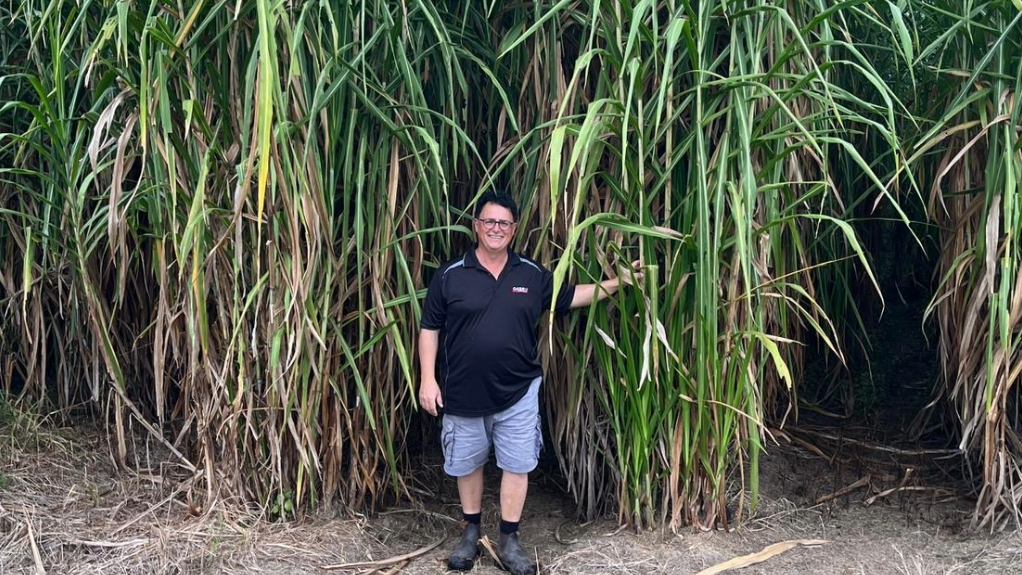
TOMAS PERSSON Bana grass grows and produces yields faster than sugarcane, and can be used as an alternative to sugarcane


The ongoing sugar industry crisis in South Africa is leaving sugarcane growers, millers and refiners with little hope regarding the industry’s sustainability. However, sustainable solutions provider Green Power Solutions (GPS) is urging growers to farm Bana grass – a protein-rich crop that can produce animal feed, biomass, green coal pellets and/or biochar for soil health improvement and water retention.
Bana grass, which closely resembles sugarcane in appearance and cultivation methods, but grows and produces yields faster, could possibly be used as an alternative to, or grow in the same field as, sugarcane, enabling sugar growers and farmers to diversify their crop offerings.
The grass could offer some relief amid the effects of imported sugar and associated products bruising local operations – to the point that Tongaat Hulett Limited (THL) is facing provisional liquidation, says GPS executive director Tomas Persson.
“With Bana grass one must remove the liquid, which contains most of the protein. After that, there’s the press cake, which we used to sell, but we now convert into biochar that can be spread in soils, allowing farmers to obtain twice as big a harvest with half the amount of fertiliser,” he explains. Moreover, being a carbon sink it could fetch about $200/t.
Countries such as Australia, Malawi, Mauritius and Hawaii are implementing Bana grass farming and processing as an alternative, or rotational, crop for the sugar industry, owing to declining sugar demand in those countries.
Persson adds that, despite contradictory statements, Bana grass can be the more cost-effective crop, at least while South Africa tries to rebuild its sugar industry.
“The reason that Bana grass is the obvious solution is because it is planted once in a lifetime. All the Bana grass plants come from one plant. Bana grass is a man-made hybrid – Napier Grass and Perl Millet. So, the Bana grass cuttings that you get are 70 years old . . . [while] sugarcane must be replanted every six years . . .”
He adds that rescuing the local sugar industry – including THL and its associated mill operations – would possibly require a R40-billion investment from government. This would take a lot of time and might not allow the country to achieve production targets in time for the milling season, which starts this month.
THL’s provisional liquidation was expected because the business rescue team was unable to sustain the company’s sugar production plants and mills, says Persson, suggesting that if the liquidation does not occur, THL’s mills are dysfunctional and cannot return timeously to commercial operation.
Further, sugar imports increased by 400% last year, at half the cost compared to THL’s, which denotes a “very dim future” for THL, as well as other companies.
Unlike some sugar organisations, Persson does not believe that a tariff would help to rescue the sugar industry, “unless the tariff is at 100%”, although he points out that such a tariff will also cause friction between South Africa and its trading partners.
Therefore, Bana grass could help to supplement the sugar industry, as it can produce protein, animal feed and fertiliser, he says, while encouraging more South African players to adopt it, as “the sugar industry is becoming a redundant industry”.
“The biggest sugarcane producer is Brazil, and [it] will continue to produce, and [it] will make it very difficult for the rest of the global industry,” he concludes.
Article Enquiry
Email Article
Save Article
Feedback
To advertise email advertising@creamermedia.co.za or click here


Projects

Latest Multimedia


Latest News


Showroom

For over 60 years, VEGA has provided industry-leading products for the measurement of level, density, weight and pressure. As the inventor of the...
VISIT SHOWROOM
EIMS is an independent specialised environmental consulting firm offering the full spectrum of environmental management services across all sectors...
VISIT SHOWROOM


Announcements
What's On
Subscribe to improve your user experience...
Option 1 (equivalent of R125 a month):
Receive a weekly copy of Creamer Media's Engineering News & Mining Weekly magazine
(print copy for those in South Africa and e-magazine for those outside of South Africa)
Receive daily email newsletters
Access to full search results
Access archive of magazine back copies
Access to Projects in Progress
Access to ONE Research Report of your choice in PDF format
Option 2 (equivalent of R375 a month):
All benefits from Option 1
PLUS
Access to Creamer Media's Research Channel Africa for ALL Research Reports, in PDF format, on various industrial and mining sectors
including Electricity; Water; Energy Transition; Hydrogen; Roads, Rail and Ports; Coal; Gold; Platinum; Battery Metals; etc.
Already a subscriber?
Forgotten your password?
Receive weekly copy of Creamer Media's Engineering News & Mining Weekly magazine (print copy for those in South Africa and e-magazine for those outside of South Africa)
➕
Recieve daily email newsletters
➕
Access to full search results
➕
Access archive of magazine back copies
➕
Access to Projects in Progress
➕
Access to ONE Research Report of your choice in PDF format
RESEARCH CHANNEL AFRICA
R4500 (equivalent of R375 a month)
SUBSCRIBEAll benefits from Option 1
➕
Access to Creamer Media's Research Channel Africa for ALL Research Reports on various industrial and mining sectors, in PDF format, including on:
Electricity
➕
Water
➕
Energy Transition
➕
Hydrogen
➕
Roads, Rail and Ports
➕
Coal
➕
Gold
➕
Platinum
➕
Battery Metals
➕
etc.
Receive all benefits from Option 1 or Option 2 delivered to numerous people at your company
➕
Multiple User names and Passwords for simultaneous log-ins
➕
Intranet integration access to all in your organisation