Additive manufacturing gains traction in niche production

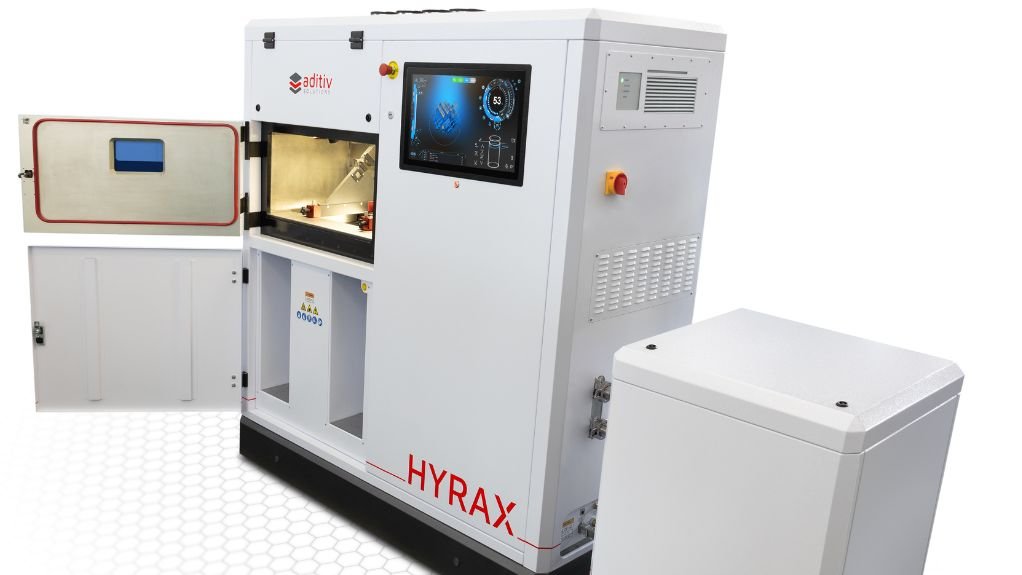
KEY BENEFITS From a sustainability perspective, the three key benefits of additive manufacturing are that it reduces material waste compared with subtractive methods, enables material reuse and lowers logistics requirements and associated costs


Greater adoption of additive manufacturing is enabling South African manufacturers to produce complex, low-volume components more cost effectively, says additive manufacturing company Aditiv Solutions CEO Marius Vermeulen.
The technology allows for the production of intricate components that are difficult or “impossible” to manufacture using conventional methods, while eliminating costly tooling. It is often used for low volume production and the typical client for Aditiv Solutions requires between one and 500 components a month.
“Across industries, adoption is expanding beyond traditional sectors. Metal additive manufacturing has historically been used in the medical, aviation, space and defence industries, but uptake is also growing in other sectors, such as sports goods, industrial applications and mining,” Vermeulen says, adding that the availability of locally produced machines has supported this shift.
In polymer applications, he highlights demand from electronic device manufacturers, noting that selective laser sintering is well suited to producing custom housings. On the other hand, additive manufacturing also supports the use of metal materials, such as titanium and Inconel, which are typically costly to machine conventionally.
Although the increasing availability of additive manufacturing services in South Africa, together with competitive pricing, is improving access, effectively using the technology also depends on technical understanding.
“Additive manufacturing is utilised across the broader manufacturing value chain, from research and development (R&D) to production and logistics,” he adds. In R&D, it is used for concept development, prototyping and field trials, reducing both costs and lead times.
In production, the technology supports decentralised manufacturing, allowing for parts to be produced at the point of use, particularly in remote operations. This capability enables companies to produce components locally, at a fraction of the capital investment required for traditional production lines, thereby reducing reliance on imports.
Further, given the decline in some local capabilities, such as casting and toolmaking, Vermeulen points out that additive manufacturing can reduce dependence on these processes, which are increasingly outsourced internationally.
Sustainability
From a sustainability perspective, Vermeulen says additive manufacturing has three key benefits: it reduces material waste, it allows for reusing unused materials; and lowers logistics requirements and the associated costs.
Producing parts closer to the point of use reduces reliance on air and sea freight while improving supply chain resilience. However, despite these advantages, Vermeulen says adoption in South Africa has lagged behind other regions, owing to previously limited availability of service providers and equipment, high costs and a lack of industry knowledge.
In terms of structural challenges, the country remains a bulk importer of high-end goods, while its manufacturing base is more focused on lower-end production.
“But it is important to note that this is changing, as more service providers enter the market, along with the increased availability of machines and the growing skills development in local companies with regard to advanced manufacturing technologies,” he
concludes.
Article Enquiry
Email Article
Save Article
Feedback
To advertise email advertising@creamermedia.co.za or click here
Projects



Latest News

Showroom

Developed to exceed the latest EN 15964 standards for police breathalysers proving that it will remain accurate and reliable for many years to come.
VISIT SHOWROOM
Design, Construction and Maintenance of Site Erected, Welded Bulk Storage Tanks for the Petrochemical, LNG, Ammonia and Sustainable fuel Sectors.
VISIT SHOWROOM


Announcements
What's On
Subscribe to improve your user experience...
Option 1 (equivalent of R125 a month):
Receive a weekly copy of Creamer Media's Engineering News & Mining Weekly magazine
(print copy for those in South Africa and e-magazine for those outside of South Africa)
Receive daily email newsletters
Access to full search results
Access archive of magazine back copies
Access to Projects in Progress
Access to ONE Research Report of your choice in PDF format
Option 2 (equivalent of R375 a month):
All benefits from Option 1
PLUS
Access to Creamer Media's Research Channel Africa for ALL Research Reports, in PDF format, on various industrial and mining sectors
including Electricity; Water; Energy Transition; Hydrogen; Roads, Rail and Ports; Coal; Gold; Platinum; Battery Metals; etc.
Already a subscriber?
Forgotten your password?
Receive weekly copy of Creamer Media's Engineering News & Mining Weekly magazine (print copy for those in South Africa and e-magazine for those outside of South Africa)
➕
Recieve daily email newsletters
➕
Access to full search results
➕
Access archive of magazine back copies
➕
Access to Projects in Progress
➕
Access to ONE Research Report of your choice in PDF format
RESEARCH CHANNEL AFRICA
R4500 (equivalent of R375 a month)
SUBSCRIBEAll benefits from Option 1
➕
Access to Creamer Media's Research Channel Africa for ALL Research Reports on various industrial and mining sectors, in PDF format, including on:
Electricity
➕
Water
➕
Energy Transition
➕
Hydrogen
➕
Roads, Rail and Ports
➕
Coal
➕
Gold
➕
Platinum
➕
Battery Metals
➕
etc.
Receive all benefits from Option 1 or Option 2 delivered to numerous people at your company
➕
Multiple User names and Passwords for simultaneous log-ins
➕
Intranet integration access to all in your organisation